Every day on our production floor, we see cafe owners struggle with a critical question steel core gauge 1. They want mugs that look stunning and survive the chaos of morning rushes. Yet many choose poorly and face chipping, complaints, and costly replacements.
To evaluate material suitability for cafe operations, assess the steel core gauge, enamel coating thickness, food-grade certifications, thermal conductivity, and resistance to commercial dishwasher cycles. Request supplier samples and conduct real-environment tests over two weeks to verify durability meets high-volume demands.
This guide breaks down the exact steps we recommend to our wholesale partners enamel coating thickness 2. You will learn how to test enamel durability, verify safety certifications, protect custom designs, and assess thermal performance. Let us walk through each factor together.
How can I verify that the enamel coating is durable enough for high-volume cafe use?
Our quality control team tests every batch before shipment food-grade safety certifications 3. We have seen coatings fail within weeks when suppliers cut corners. The difference between good and bad enamel often comes down to firing temperature and layer thickness thermal conductivity 4.
Verify enamel durability by checking the coating thickness (minimum 0.3mm), firing temperature (above 800°C), and conducting drop tests from one meter height. Quality enamel withstands 1000+ dishwasher cycles without chipping. Request test certificates and run your own two-week cafe trial before bulk ordering.
Understanding the Enamel Structure
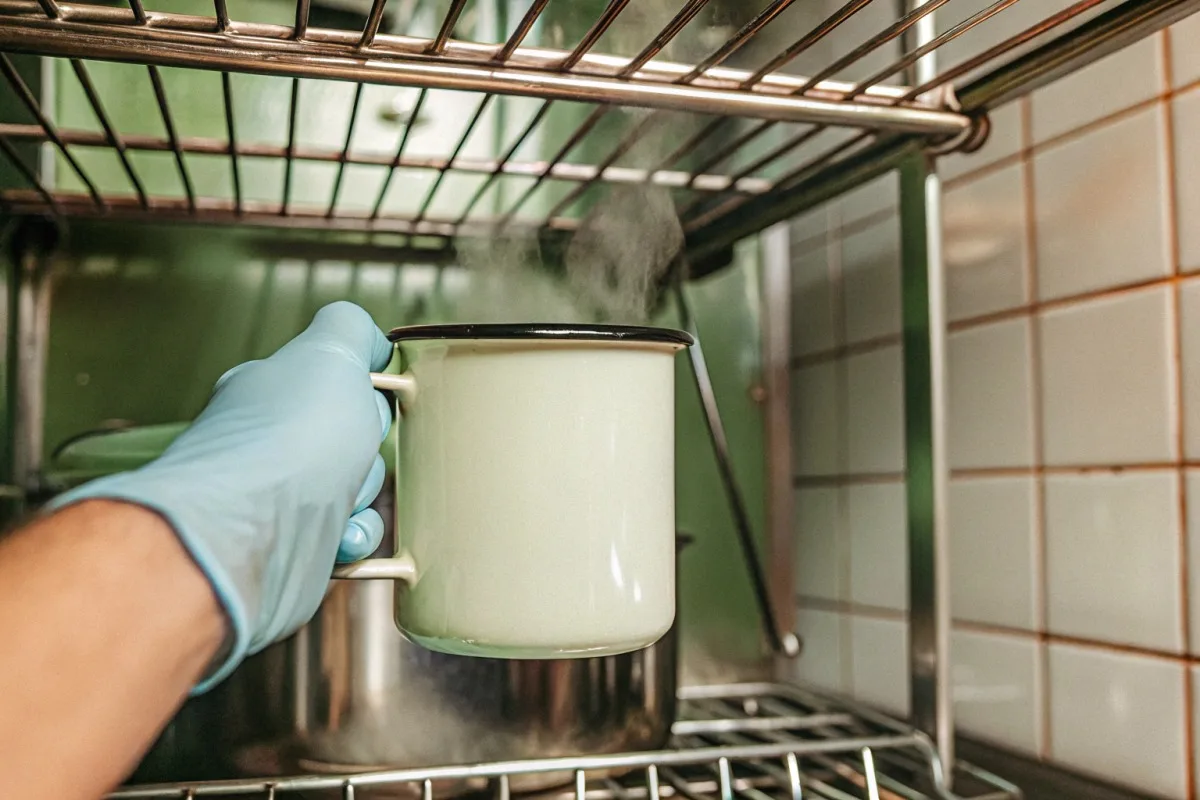
Enamel mugs consist of three main layers. The base is typically steel or iron. The middle layer is the enamel coating, which is essentially fired glass FDA compliance 5. Many premium mugs also feature a stainless steel rim for extra protection.
When we fire enamel at our facility, the glass powder melts and bonds to the metal EU 1935/2004 certification 6. This creates a smooth, non-porous surface. Higher firing temperatures create stronger bonds. Low-quality producers rush this step, leading to weak adhesion.
Key Durability Tests You Should Perform
Before placing a large order, request samples and run these tests yourself. This small investment saves thousands in returns and replacements.
| Test Type | Method | Pass Criteria |
|---|---|---|
| Drop Test | Drop mug from 1 meter onto concrete | No chips or cracks |
| Scratch Test | Rub with steel wool for 30 seconds | No visible scratches |
| Dishwasher Test | Run 50 consecutive cycles | No fading or chipping |
| Thermal Shock | Pour boiling water, then ice water | No cracking |
| Acid Resistance | Soak in coffee for 24 hours | No staining or reaction |
Red Flags to Watch For
Avoid suppliers who cannot provide firing temperature data. Be wary of unusually low prices. In our experience, mugs priced below $0.60 often fail basic durability tests. The enamel layer may be too thin or improperly fired.
Check the rim carefully. This area chips first under rough handling. Stainless steel rims, especially 304-grade, add significant protection. We recommend this upgrade for any cafe expecting high daily use.
Look at the color consistency across samples. Uneven coloring suggests inconsistent firing. This usually means durability varies from mug to mug.
What food-grade safety certifications should I demand from my supplier to protect my customers?
When our team develops new products for export to the US and Europe, compliance is never optional. We have seen shipments held at customs because suppliers provided fake certificates. Your customers trust you with their health.
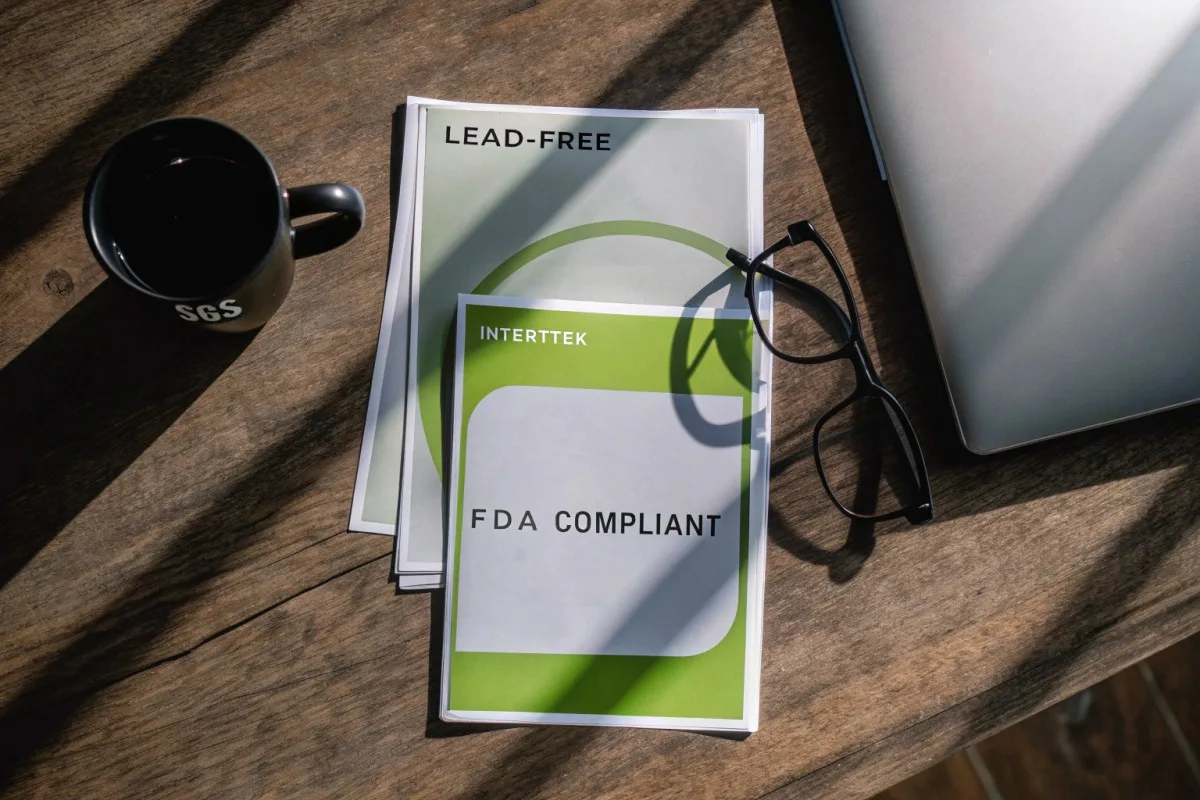
Demand FDA compliance for US sales and EU 1935/2004 certification for European markets. Verify the enamel is lead-free, cadmium-free, and BPA-free. Request third-party lab test reports, not just supplier declarations. Legitimate suppliers provide SGS or Intertek certificates without hesitation.
Essential Certifications by Market
Different regions require different certifications. Here is what you need based on your target market.
| Market | Required Certification | What It Covers |
|---|---|---|
| United States | FDA 21 CFR 175.300 | Food contact safety |
| European Union | EU 1935/2004 | Migration limits for metals |
| Germany | LFGB | Stricter heavy metal limits |
| California | Prop 65 | Lead and cadmium warnings |
| Australia | Food Standards Code | General food safety |
How to Verify Certificate Authenticity
Fake certificates are common in our industry. We always tell buyers to verify directly. Contact the testing lab mentioned on the certificate. Provide the certificate number. They will confirm if it is genuine.
Look for specific test results, not generic statements. Real certificates list exact migration limits for lead, cadmium, and other metals. They include lot numbers and testing dates. Vague certificates that say "food safe" without data are often worthless.
Why Chemical Composition Matters for Coffee Service
Coffee is acidic. This means it can leach metals from poor-quality coatings. When we formulate our enamel, we test specifically for coffee contact. The pH level of espresso ranges from 4.85 to 5.10. This acidity can slowly degrade inferior coatings.
Lead and cadmium were historically used in colored enamels. Modern food-grade enamel eliminates these. However, some low-cost producers still use old formulations. Always verify heavy metal content through independent testing.
Building a Certification Checklist
Create a standard checklist for every supplier evaluation. Share this before requesting quotes. Serious suppliers respond quickly with documentation. Those who hesitate or make excuses should be avoided.
Your checklist should include:
- Heavy metal test reports dated within 12 months
- Food contact compliance certificates for your target market
- Material safety data sheets for the enamel formulation
- Factory audit reports if available
- Contact information for the testing laboratory
Will the material quality prevent my custom designs from chipping during daily commercial washing?
We invested heavily in our printing technology precisely because of this concern. Our cafe partners told us their biggest frustration was designs fading after weeks. The culprit was usually the printing method, not the enamel itself.
Material quality significantly impacts design longevity, but printing method matters equally. Baked enamel prints fired at high temperatures resist commercial dishwashers far better than decal transfers. Request samples, run 100 dishwasher cycles, and inspect for fading, peeling, or micro-cracks around design edges.

Comparing Printing Methods for Durability
Not all customization techniques last equally. Understanding the options helps you choose wisely.
| Printing Method | Durability Rating | Best For | Dishwasher Cycles |
|---|---|---|---|
| Fired Enamel Print 7 | Excellent | High-volume cafes | 1000+ |
| Screen Printing | Very Good | Bold, simple designs | 800+ |
| Digital Transfer | Good | Complex artwork | 500+ |
| Decal Application | Fair | Low-volume use | 200-300 |
| Pad Printing | Good | Small logos | 600+ |
Design Placement and Chip Risk
Where you place your design affects longevity. The rim and base edge are high-risk areas. Stacking causes friction at these points. We recommend keeping designs at least 15mm from the rim and 10mm from the base.
Handle attachment points also experience stress. Avoid wrapping designs around handle joints. This area flexes slightly during heating and cooling. Repeated stress can crack prints that extend across this zone.
Protecting Designs Through Material Selection
Thicker enamel coatings protect underlying designs better. When the outer layer chips, it may not reach the printed layer if sufficient thickness exists. We recommend minimum 0.4mm total coating thickness for printed mugs.
The steel base gauge also matters. Thinner steel dents more easily. Dents stress the enamel and cause cracking. For commercial cafe use, 0.6mm steel gauge provides good protection without excessive weight.
Testing Protocol for Design Durability
Run this test before committing to a large order. It simulates roughly three months of cafe use.
First, wash samples 100 times in a commercial dishwasher on the standard cycle. Use commercial detergent, not home products. Commercial formulations are more aggressive.
After every 25 cycles, photograph the same spot on each mug. Compare photos for subtle fading. Use a magnifying glass to check for micro-cracks. Run your fingernail across design edges to feel for lifting.
Document everything. Share results with your supplier. Quality manufacturers appreciate this feedback and will adjust their process if issues emerge.
How do I assess if the thermal conductivity of these mugs is suitable for serving hot coffee?
Our engineering team spent months optimizing wall thickness for coffee service. Enamel conducts heat differently than ceramic or stainless steel. Understanding this helps you set customer expectations and train staff properly.
Enamel mugs have moderate thermal conductivity, warming quickly but also cooling faster than ceramic. Single-wall designs transfer heat to the exterior, requiring careful handling of hot beverages. Test by timing how long coffee stays above 60°C and checking exterior temperature for safe customer handling.
Understanding Heat Behavior in Enamel
Steel conducts heat much faster than ceramic. The enamel coating slows this slightly but not dramatically. When you pour hot coffee into an enamel mug, the exterior becomes warm within seconds.
This is both advantage and drawback. The warm exterior signals to customers that their drink is hot. However, it also means staff must handle mugs carefully. Using handles is essential.
Temperature Retention Comparison
We tested mugs across different materials to provide concrete data. All mugs held 350ml of coffee starting at 85°C.
| Material | Temp at 5 min | Temp at 15 min | Temp at 30 min |
|---|---|---|---|
| Enamel (single wall) | 72°C | 58°C | 45°C |
| Ceramic | 75°C | 62°C | 50°C |
| Stainless Steel (single) | 68°C | 52°C | 40°C |
| Double-Wall Insulated | 80°C | 72°C | 62°C |
Enamel performs respectably for cafe service where customers typically drink within 15 minutes. For takeaway service where drinks sit longer, consider double-wall alternatives.
Handle Design and Heat Transfer
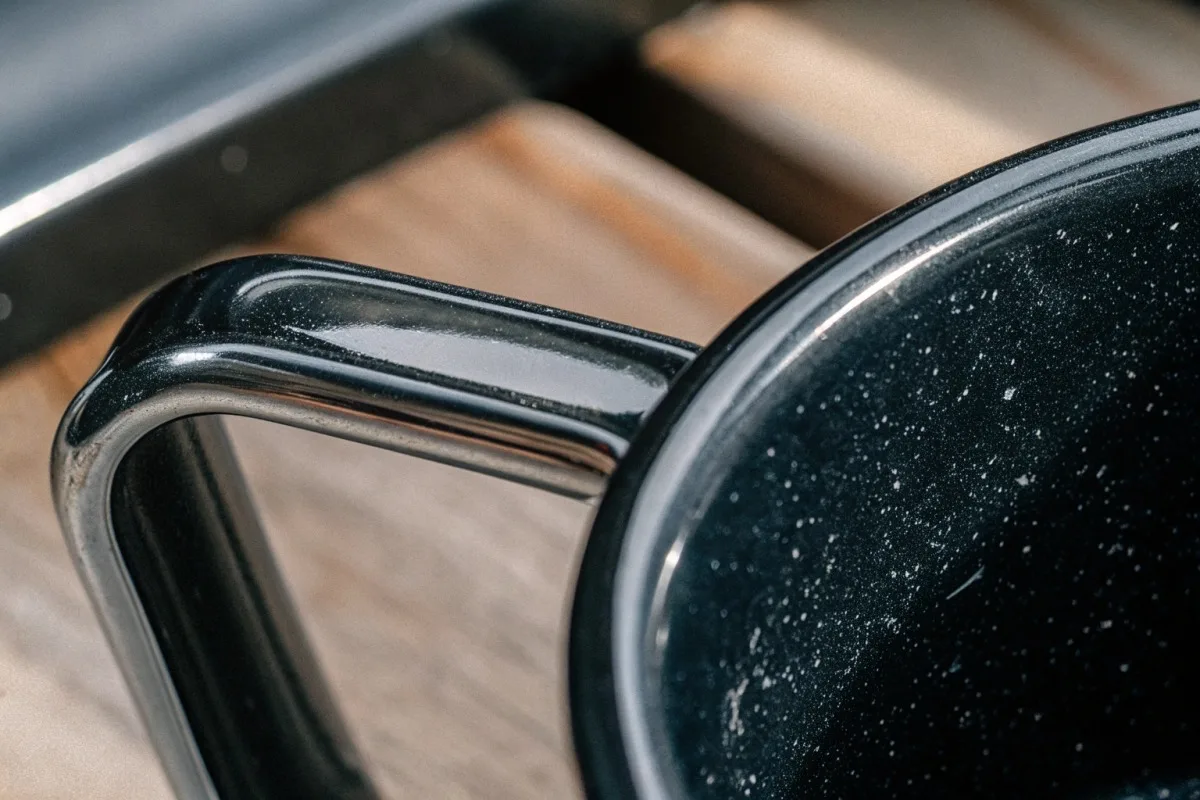
Handle attachment affects how heat moves through the mug. Spot-welded handles create thermal bridges. The handle itself warms up. Rolled handles with minimal contact points stay cooler.
When evaluating samples, pour boiling water and wait three minutes. Touch the handle carefully. Good designs allow comfortable grip. Poor designs force customers to wait or use napkins.
Handle diameter matters too. Thin wire handles heat faster than thick tubular handles. We recommend minimum 6mm diameter for cafe service.
Practical Tips for Cafe Service
Pre-warm mugs for optimal beverage temperature. A quick rinse with hot water raises the starting temperature. This compensates for heat absorption by the cold mug.
Train staff to always use handles when transporting hot drinks. Never grab the mug body. This prevents burns and reduces stress on the enamel coating.
Consider your menu carefully. Enamel works excellently for standard hot coffee and tea. For beverages requiring extended warmth, such as slow-sipping hot chocolate, ceramic may serve better.
Matching Mug Size to Beverage Type
Common cafe sizes serve different purposes. Choose based on your menu mix.
| Size | Capacity | Best Beverage Type | Heat Retention |
|---|---|---|---|
| 8oz (240ml) | Small | Espresso, cortado | Fastest cooling |
| 12oz (350ml) | Medium | Americano, flat white | Moderate |
| 16oz (470ml) | Large | Latte, cafe au lait | Better retention |
| 20oz (590ml) | Extra large | Filter coffee, tea | Best retention |
Larger volumes retain heat longer simply due to mass. If your cafe specializes in quick espresso drinks, smaller mugs suffice. For filter coffee service where customers linger, choose larger sizes.
Conclusion
Evaluating enamel mugs for cafe operations requires testing durability, verifying certifications, protecting designs, and understanding thermal behavior. Request samples, run real-world tests, and partner with suppliers who provide transparent documentation.
Footnotes
1. Explains steel gauge as a standard for metal thickness. ↩︎
2. Discusses how enamel coating thickness affects properties on steel surfaces. ↩︎
3. Provides an overview of key food-grade certifications for kitchenware. ↩︎
4. Explains thermal conductivity as a material property relevant to heat transfer. ↩︎
5. Details FDA regulations for food contact materials in the USA. ↩︎
6. Replaced with the official EUR-Lex page containing the full text of EU Regulation (EC) No 1935/2004. ↩︎
7. Found a working blog post from the original domain that discusses screen printing vitreous enamel, which aligns with ‘Fired Enamel Print’. ↩︎