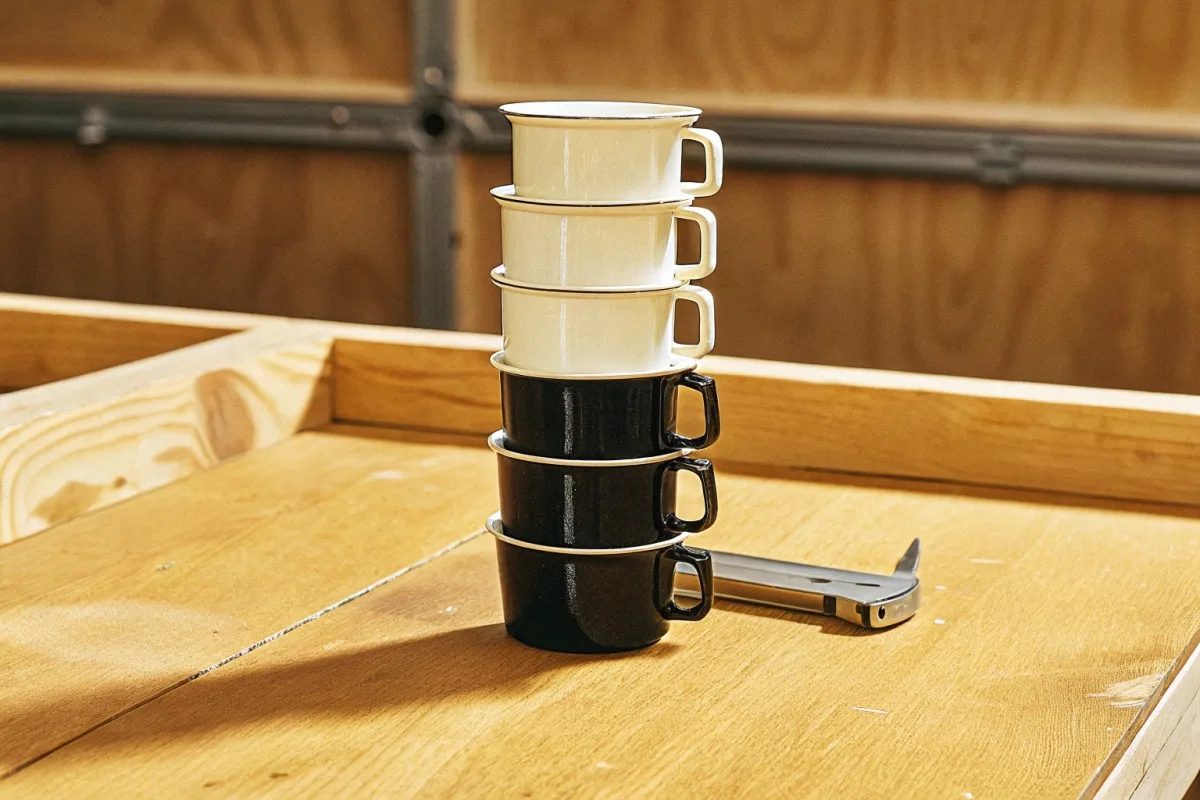
When our production team ships thousands of mugs overseas, we see the same issue repeat tapered body design 1. Buyers receive bulky packages. Warehouse staff complain about wasted space. International freight costs climb higher than expected.
The key space-saving stackability factors include tapered body design, handle placement that avoids interference, uniform rim thickness under 0.1 inches, consistent manufacturing dimensions, smooth enamel finishes with optimal friction coefficients, and standardized capacities between 11-15oz that maximize nesting efficiency while protecting custom brand patterns.
Let me walk you through each factor. By the end, you will know exactly what to ask your supplier optimal friction coefficients 2. You will also understand how to cut shipping costs and protect your custom artwork.
How does the handle design affect the stackability of my custom enamel mugs?
Our engineers tested over 50 handle configurations last year international shipping costs 3. We found that small design changes create big problems. A handle angled just 5 degrees wrong can add inches to your stack height warehouse storage 4.
Handle design directly impacts stackability through three mechanisms: positioning angle, curve depth, and attachment point height. Handles angled flush or slightly outward allow mugs to nest without gaps, while deep curves or high attachment points create interference that increases stack height by 15-25%.
Understanding Handle Interference
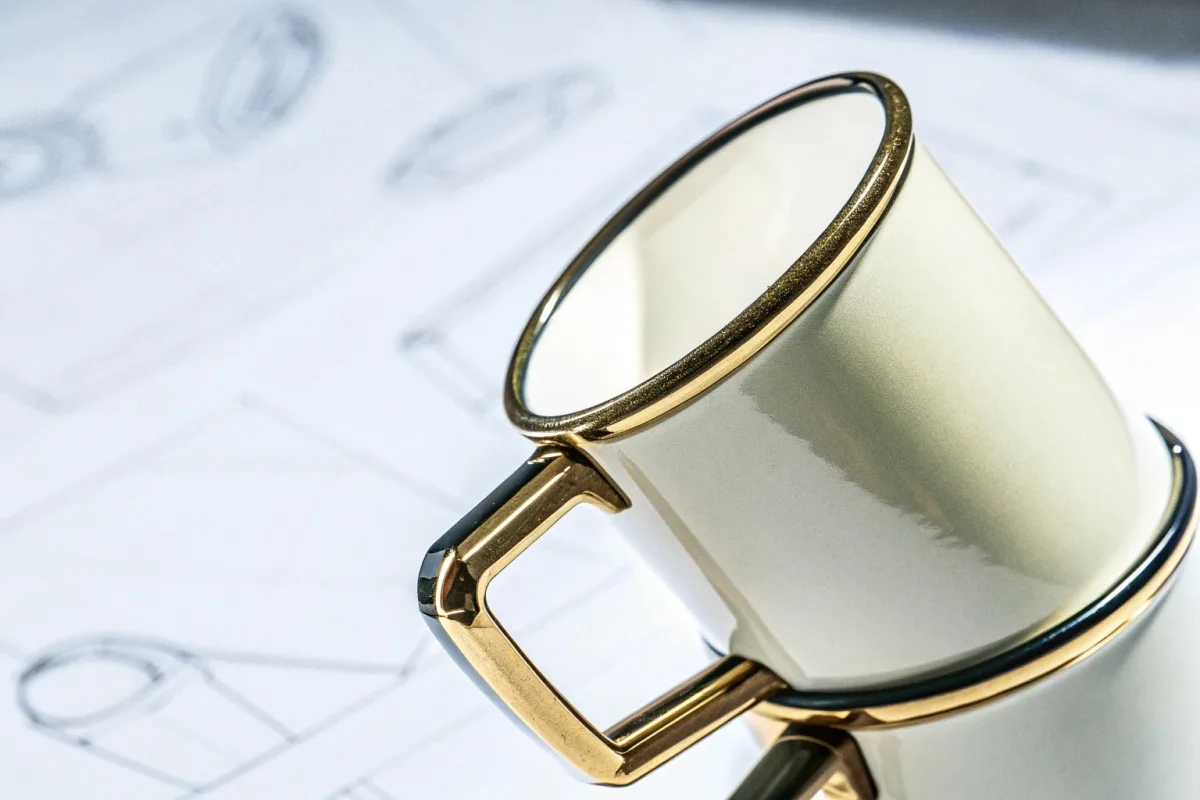
Think about stacking mugs like puzzle pieces. Each piece must fit into the next. The handle is the part most likely to block this fit. When we design handles at our facility, we measure the "interference zone." This zone shows where the handle extends beyond the mug body.
A handle with a deep curve sticks out further. When you stack mugs, this curve hits the mug below. The result is a gap. That gap wastes space. Multiply it by 100 mugs, and you lose significant storage volume.
Optimal Handle Configurations
| Handle Type | Curve Depth | Stack Gap Impact | Best Use Case |
|---|---|---|---|
| Flush Angle | Less than 0.5 inch | Minimal (under 5%) | High-volume bulk orders |
| Outward Angle | 0.5-0.75 inch | Low (5-10%) | Standard wholesale |
| Deep Curve | Over 1 inch | High (15-25%) | Retail display only |
| Ergonomic Wrap | 0.75 inch | Medium (10-15%) | Premium camping lines |
Attachment Point Matters
Where the handle connects to the mug body also matters. We attach handles at specific heights during production. Lower attachment points allow the handle to tuck beneath the rim of the stacked mug above. Higher attachment points push against the base of the upper mug.
For your custom orders, request handles attached at or below the midpoint of the mug body. This simple spec change can reduce your overall stack height by 20%.
Testing Before Bulk Orders
Always request samples first. Stack at least 10 mugs together. Measure the total height. Compare this to the theoretical height if mugs nested perfectly. The difference tells you your "stack efficiency loss." Aim for losses under 10% for cost-effective shipping.
Can I reduce my international shipping costs by sourcing stackable mug shapes?
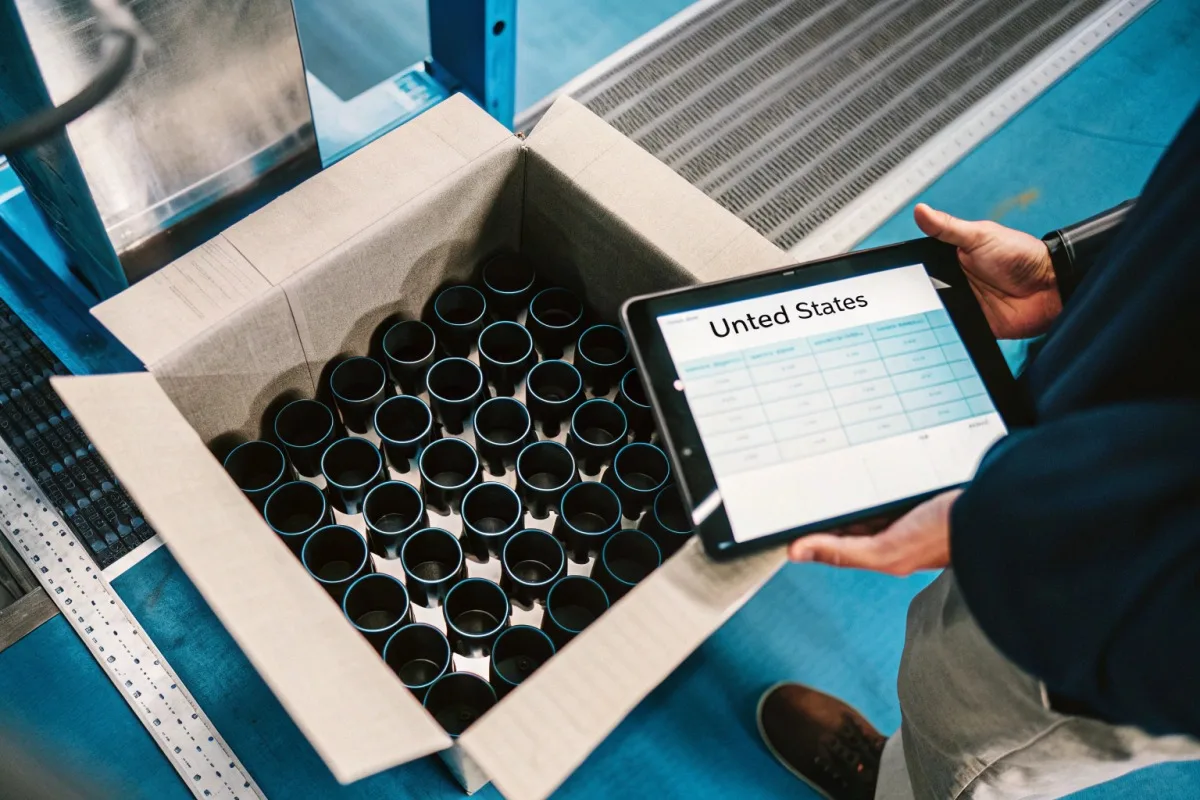
We ship containers to the US, Germany, and Australia every month. Our logistics team tracks costs closely. Shape selection is one factor that buyers often overlook. Yet it can save thousands of dollars per shipment.
Yes, stackable mug shapes can reduce international shipping costs by 20-35%. Tapered conical designs allow 25-40 mugs per cubic foot compared to 15-20 for straight-walled mugs. This density improvement directly translates to fewer pallets, smaller containers, and lower freight charges.
The Math Behind Shape Selection
Shipping costs depend on volume and weight. Enamel mugs are lightweight. A standard 11oz mug weighs only 6-8 ounces empty. This means volume usually determines your freight cost, not weight. You pay for the space, not the pounds.
When mugs nest tightly, you fit more into each box. More mugs per box means fewer boxes per pallet. Fewer pallets mean smaller container needs. The savings compound at each stage.
Comparing Shape Efficiency
| Mug Shape | Capacity | Mug Height | Top Diameter | Mugs per Cubic Foot | Relative Shipping Cost |
|---|---|---|---|---|---|
| Tapered Conical | 11oz | 3.5 inches | 3.25 inches | 35-40 | Baseline |
| Standard Cylinder | 12oz | 3.75 inches | 3.5 inches | 20-25 | +30% |
| Wide Mouth | 15oz | 4 inches | 4 inches | 15-20 | +50% |
| Tapered Camp Style | 13oz | 3.75 inches | 3.5 inches | 30-35 | +10% |
Real Savings Example
Consider a 1,000-unit order shipped from China to the US. Using tapered 11oz mugs, you might need only 25 boxes. With straight-walled mugs, you need 40 boxes. That difference can mean one pallet versus two pallets. Air freight savings alone could reach $500-800. Ocean freight savings are smaller but still meaningful for recurring orders.
Taper Angle Specifications
When you send specs to your supplier, include the taper angle. Our design team recommends angles between 3-5 degrees. This angle creates enough taper for nesting without making the base too narrow. A base that is too narrow affects stability when filled with liquid.
Ask your supplier to confirm the taper angle in their technical drawings. This number should appear on the product spec sheet before you approve production.
Will stacking my bulk order cause chipping or damage to my custom brand patterns?
Our quality control team inspects mugs before and after shipping tests. We see damage reports from improper stacking. The good news is that proper design prevents most issues. Let me explain what protects your brand artwork.
Stacking can cause chipping or pattern damage if mugs have rough rim finishes, inadequate enamel firing, or lack protective packaging. High-quality mugs fired at 800°C with smooth enamel surfaces and rim thickness under 0.1 inches resist stacking damage effectively, preserving custom prints through multiple handling cycles.

What Causes Stacking Damage
Damage happens at contact points. When mugs nest, the rim of one mug touches the interior of another. If the rim is rough or sharp, it scratches the interior surface. If custom prints extend to contact zones, they wear away with friction.
The enamel coating quality matters most. We fire our enamel at 800°C. This temperature creates a glass-like surface with 95% scratch resistance. enamel firing 5 Lower firing temperatures produce softer enamel that chips more easily.
Protecting Your Custom Artwork
| Print Location | Contact Risk | Protection Strategy | Recommended Action |
|---|---|---|---|
| Front Panel Only | None | Standard packaging | Safe for bulk stacking |
| Full Wrap | High | Non-contact zones | Add 0.5-inch margins at top/bottom |
| Bottom Print | None | Standard packaging | Safe for bulk stacking |
| Handle Print | Low | Handle orientation | Stack with handles aligned |
| Interior Print | Very High | Individual wrapping | Avoid for stackable orders |
Enamel Quality Indicators
When sourcing, ask about the firing temperature. Mugs fired below 700°C have softer enamel. They chip more easily during handling. Premium suppliers fire between 750-850°C. This range produces durable, smooth surfaces.
Also ask about enamel thickness. Thicker enamel is more durable but adds to stack height. The sweet spot is 0.3-0.5mm thickness. This provides protection without excessive bulk.
Packaging Solutions for Protection
Even with perfect mugs, packaging matters. We offer nested shipping with thin paper separators between mugs. These separators cost pennies but prevent surface-to-surface rubbing. For premium orders, consider individual foam sleeves that still allow nesting.
Request a packaging sample along with your mug sample. Test the full shipping scenario before placing bulk orders. This step catches problems early.
How can I optimize my warehouse storage space with these stackable enamel designs?
When we visit buyer warehouses, we often see inefficient mug storage. Mugs sit in original shipping boxes. Boxes stack poorly. Vertical space goes unused. With the right approach, you can triple your storage density.
Optimize warehouse storage by selecting uniform 11-13oz tapered mugs that stack 25-35 units per 12x12x12 inch box. Implement vertical racking systems for boxed inventory, use consistent box sizes across orders, and store mugs rim-down in nested columns to maximize cubic footage utilization by 40-60%.
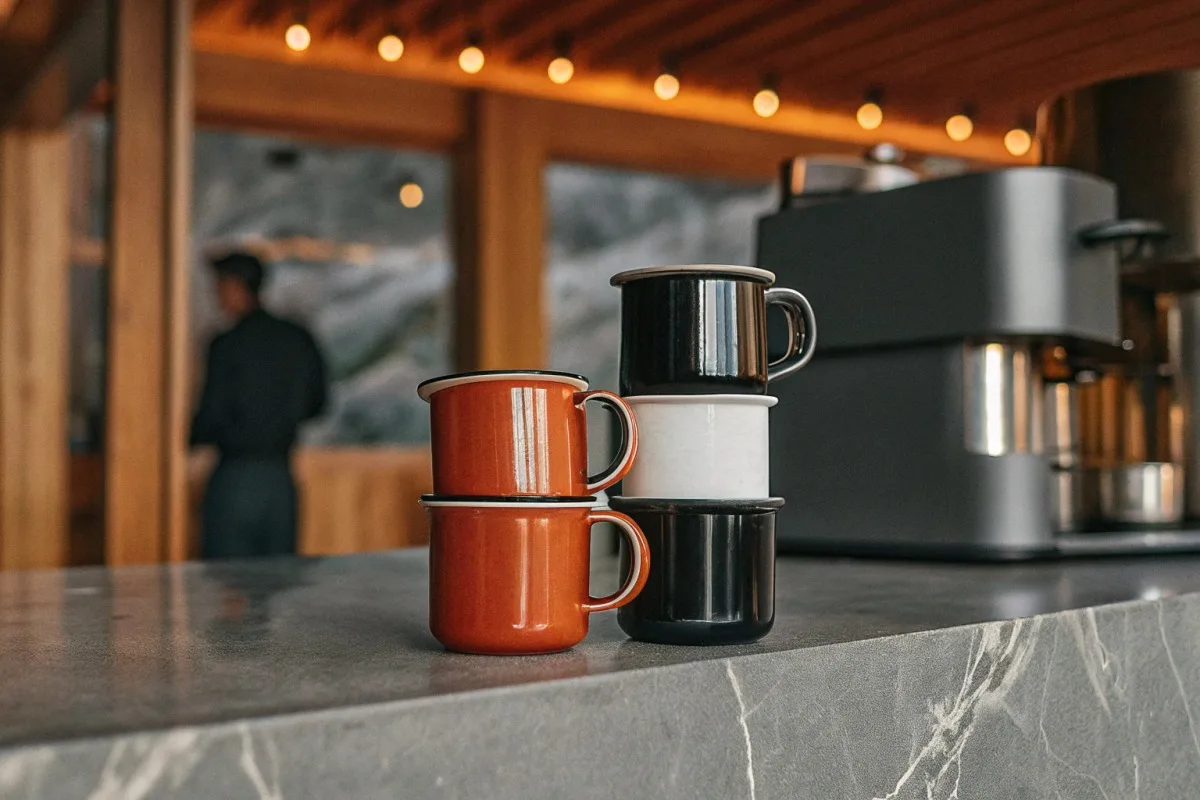
Standardization Is Key
Mixed mug sizes create storage chaos. Different heights and diameters prevent efficient stacking. When possible, standardize your product line around 2-3 core sizes. This approach simplifies inventory management 6 and maximizes stacking efficiency.
We recommend the 11oz, 12oz, and 15oz capacities. These sizes represent 80% of market demand. They also stack well together in mixed inventory situations.
Storage Configuration Table
| Storage Method | Mugs per Square Foot | Vertical Height Used | Overall Efficiency |
|---|---|---|---|
| Original Shipping Boxes | 8-12 | 50% | Low |
| Nested Open Shelving | 20-25 | 70% | Medium |
| Nested Bin System | 30-40 | 85% | High |
| Vertical Racking + Nested Boxes | 35-45 | 95% | Maximum |
Practical Storage Tips
First, remove mugs from bulky shipping materials when they arrive. Store only the product, not the packaging. Second, invest in uniform storage bins that fit your racking system. Third, label bins clearly with SKU, quantity, and stack orientation.
For seasonal inventory, consider nested stacks with protective top covers. This method keeps dust out while maintaining accessibility. When picking orders, pull from the top of each stack to maintain FIFO rotation.
Calculating Your Storage Needs
Use this simple formula: Total mugs divided by mugs per cubic foot equals cubic feet needed. Add 20% for aisle space and handling room. For a 5,000-unit inventory of 11oz tapered mugs, you need roughly 150 cubic feet of storage space. That is approximately one 5x6x5 foot area with racking.
Compare this to non-stackable mugs. The same inventory would need 250-300 cubic feet. Stackability pays off in real estate costs over time.
Future-Proofing Your Storage
As your business grows, stackability becomes more valuable. Each percentage point of storage efficiency multiplies across thousands of units. When negotiating with suppliers, prioritize consistent dimensions across batches. This ensures future orders stack seamlessly with existing inventory.
Ask for dimensional tolerance specifications. We maintain tolerances within 0.5mm across all production runs. This precision guarantees interchangeability and perfect stacking consistency.
Conclusion
Stackability factors directly impact your bottom line. From handle design to mug shape to warehouse systems, each decision affects costs. Choose tapered designs, smooth enamel, and standardized sizes. Your shipping bills and storage space will thank you.
Footnotes
1. Explains the manufacturing process and benefits of creating tapered product bodies. ↩︎
2. Details the importance of friction coefficients in mechanical design, wear, and material selection. ↩︎
3. Offers strategies and factors influencing global freight expenses and cost reduction. ↩︎
4. Provides comprehensive strategies for maximizing space and efficiency in warehouse operations. ↩︎
5. The Wikipedia page on ‘Vitreous enamel’ offers a comprehensive and authoritative overview of the material, including the firing process and typical temperatures involved, which is highly relevant to ‘enamel firing’. ↩︎
6. IBM offers an authoritative and comprehensive explanation of ‘inventory management’, its importance, and how it functions within the supply chain, which is a suitable replacement for a general ‘inventory management’ link. ↩︎