Enamel mugs rarely fail in obvious ways. Problems usually surface after the product reaches the market, when small flaws begin turning into complaints, returns, and pressure on the brand.
When purchasing enamel mugs, product quality standards should focus on food safety compliance, enamel coating consistency, structural durability, and repeatable production control. Real quality is proven by how reliably these standards hold across every shipment, not by a single approved sample.
Understanding these standards early helps buyers avoid hidden risks that only appear after customers start using the mugs in real conditions.
How do I verify if enamel mugs meet international food safety certifications?
Food safety certificates often look reassuring at first glance. The real issue is whether those documents actually reflect the mugs being produced and shipped, not just a prepared testing sample.
To verify food safety compliance, request FDA or LFGB reports tied to real production batches, including photos, batch numbers, and accredited lab details. Certification must match the same enamel formula, firing process, and decoration method used in mass production.
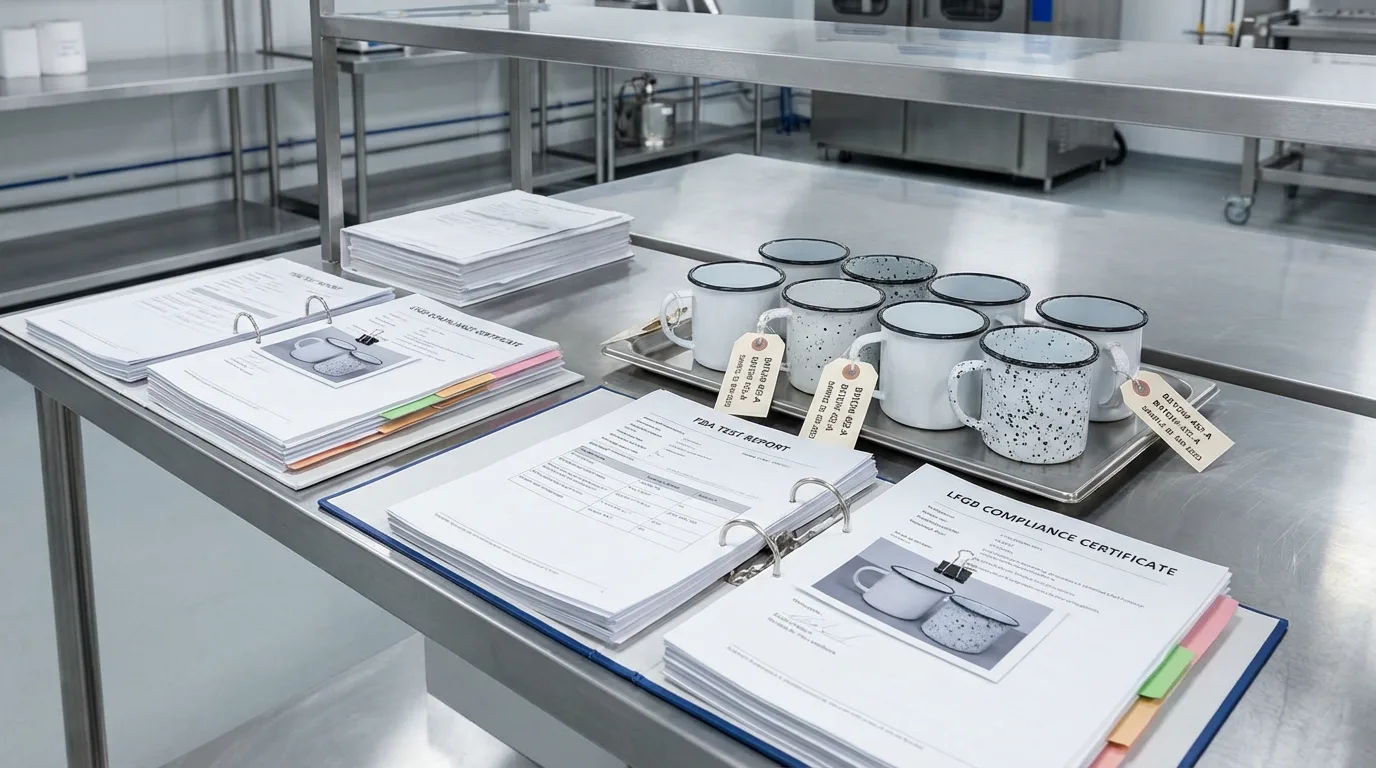
What food safety certification really covers
For enamel mugs, food safety focuses on the glass enamel layer that contacts beverages. FDA and LFGB testing evaluates heavy metal migration1, mainly lead and cadmium, under controlled conditions.
A valid report confirms the enamel itself is food-safe. It does not guarantee overall product quality or durability.
Documents buyers should request
| Document type | Key detail to verify | Reason |
|---|---|---|
| FDA or LFGB report | Batch number and product photo | Confirms report matches real product |
| Heavy metal migration data | Lead and cadmium limits | Ensures food-contact safety |
| Lab accreditation | ISO 170252 | Confirms test reliability |
Common certification mistakes
Certificates reused across different mug models or colors signal risk. Changes in enamel pigment, rim treatment, or decoration can affect test validity.
A simple comparison helps. The tested sample and production unit should look and feel identical inside the mug. Differences usually indicate shortcuts.
Food safety failures are difficult to recover from. Once customers question safety, trust erodes quickly.
What durability and safety tests should I request from suppliers?
Durability problems rarely appear during inspection. They show up after repeated use, when mugs are dropped, stacked, washed, and exposed to heat again and again.
Buyers should request impact resistance, thermal shock, handle strength, and adhesion tests. These tests reveal whether enamel mugs can survive daily use without chipping, cracking, or coating failure.
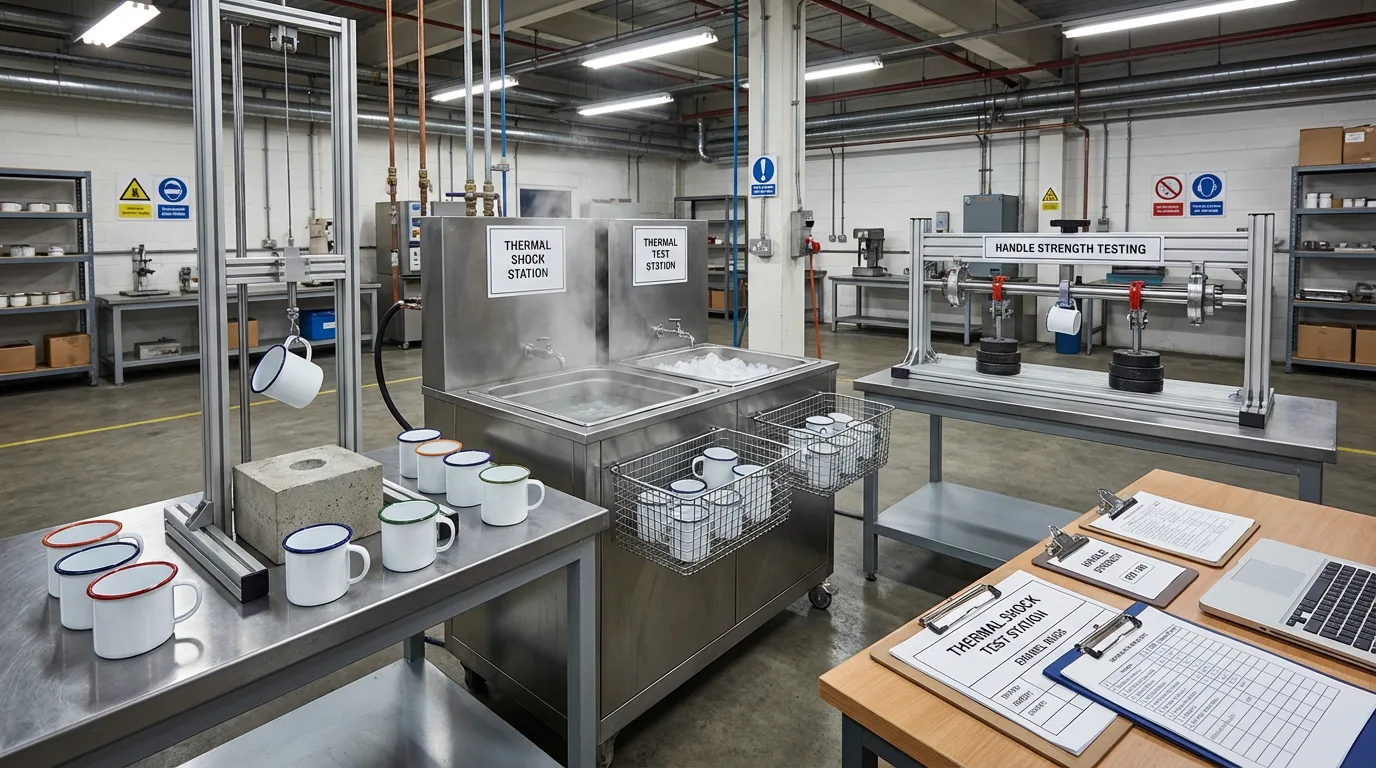
Core durability tests that matter
| Test type | What it simulates | Why it matters |
|---|---|---|
| Impact test | Accidental drops | Chip resistance |
| Thermal shock | Hot-to-cold cycles | Enamel adhesion |
| Handle pull test | Lifting stress | User safety |
| Adhesion test | Print bonding | Brand appearance |
Why enamel mugs fail after launch
Failures usually begin at stress points: rims, handle joints, and thin steel areas. Uneven steel thickness or rushed firing creates micro-cracks that expand with use.
Passing inspection once does not predict long-term performance.
How to read test results correctly
Ask for test parameters, not just pass labels. Repeated cycles provide more insight than single tests.
Durability protects brand reputation. Customers remember mugs that chip, not those that quietly last for years.
How can I ensure the enamel coating is consistent and defect-free?
At first glance, enamel defects seem cosmetic. Over time, thin rims, pinholes, and uneven coating begin affecting customer perception and product lifespan.
Ensuring coating consistency requires visual standards, rim inspection, enamel thickness control, and batch-level quality checks. The goal is uniform results across thousands of mugs, not perfection on a single unit.
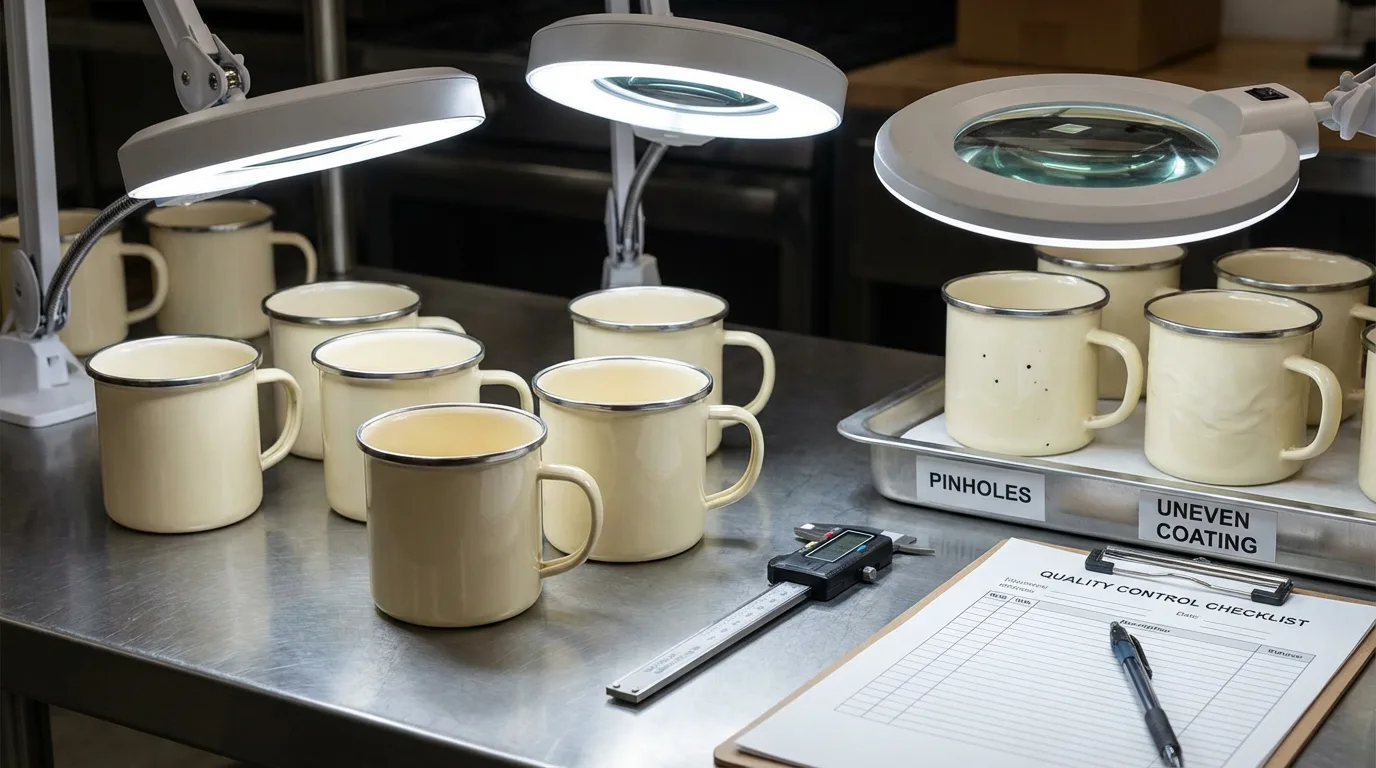
Common enamel coating defects
| Defect | Root cause | Risk |
|---|---|---|
| Pinholes | Trapped gas | Rust exposure |
| Thin rim coating | Poor dipping | Chipping |
| Uneven gloss | Inconsistent firing | Visual downgrade |
Why rim quality deserves focus
The rim is both a contact surface and a structural edge. Rolled rims with proper enamel flow reduce chipping and feel smoother to drink from.
Touch inspection matters. A smooth rim usually signals controlled firing and enamel viscosity.
Consistency over cosmetic perfection
Minor variations may exist in enamel products. What matters is predictability. Random defects point to unstable process control.
From a brand perspective, customers tolerate character. They do not tolerate rust, sharp edges, or early wear.
What quality benchmarks are most important for my brand’s reputation?
Passing inspection is only the starting point. The real test is whether the same quality can be repeated across large volumes without drift.
The most important benchmarks are accurate food safety compliance, low defect rates, enamel durability over time, and consistent appearance across batches. These factors directly influence reviews, repeat orders, and brand trust.
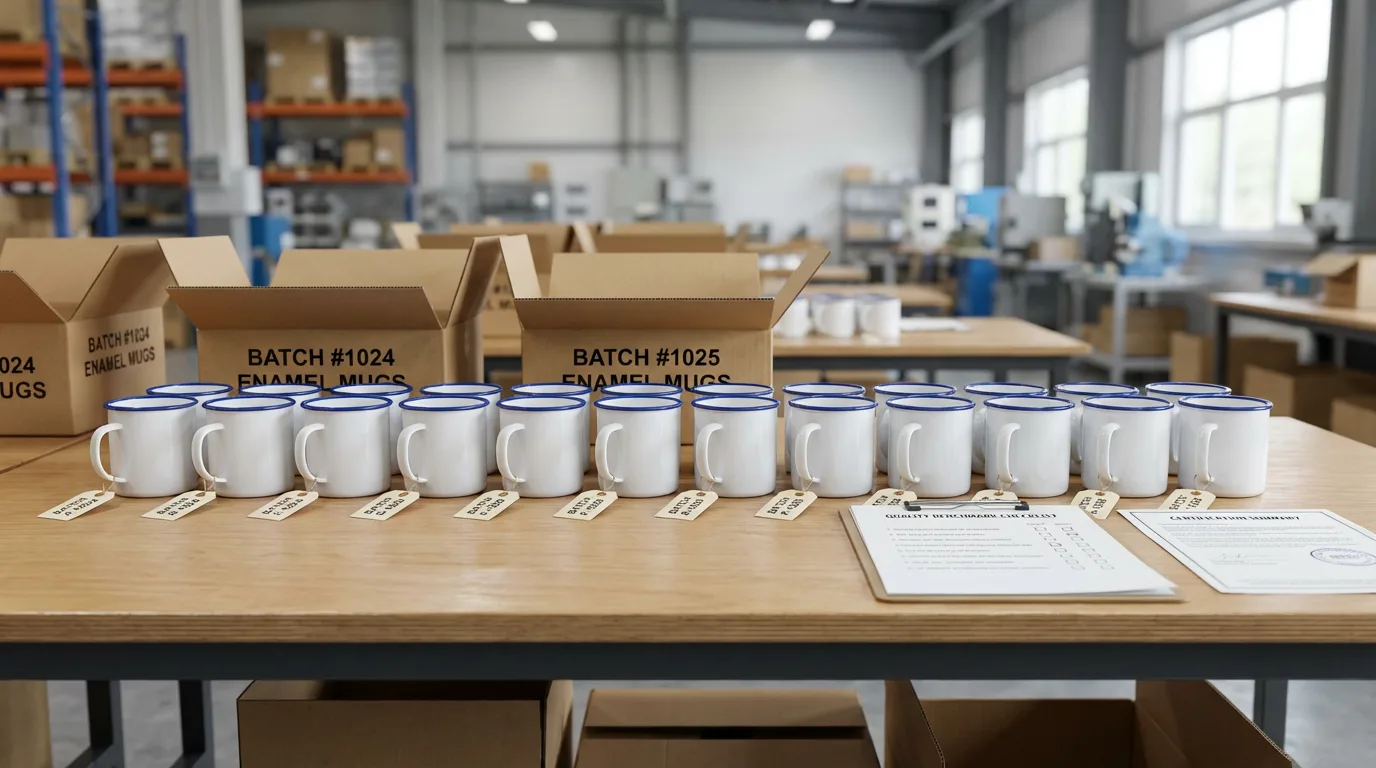
Brand-level quality benchmarks
| Benchmark | Impact on brand |
|---|---|
| Certification accuracy | Safety trust |
| Coating consistency | Shelf appeal |
| Low chip rate | Customer satisfaction |
| Print durability | Brand image |
Premium versus cost-driven choices
Certified budget mugs can be safe. Differences emerge in longevity. Premium production invests in thicker steel, controlled firing, and careful handling.
Brands should align quality benchmarks with product positioning. A keepsake demands different standards than a giveaway.
Why subtle issues matter most
Quality problems in enamel mugs are rarely dramatic. They accumulate quietly across shipments.
I focus less on pass-or-fail standards and more on repeatability. Consistent rim feel, enamel thickness, and print clarity protect brand reputation better than any single report.
Conclusion
Enamel mug quality depends on safety, durability, and consistency. Brands that evaluate these standards early avoid costly issues later and build lasting customer trust.