
From our production floor in Huizhou, we have seen countless sourcing relationships fail B2B platforms 1. Buyers receive 500 mugs with chipped enamel or faded prints. The supplier vanishes. The money is gone.
To vet custom enamel mug suppliers using social media reviews, search for supplier names on Instagram, Facebook, LinkedIn, and TikTok. Look for customer photos, complaints about quality or delays, and how suppliers respond to criticism. Cross-check findings with B2B platforms and request samples before committing.
This guide will show you exactly where to find authentic reviews, how to spot red flags, and what steps protect your investment Alibaba discussion forums 2. Let us walk through each step together.
When our team helps new clients navigate supplier selection 3, we always start with social media research. Many buyers skip this step. They pay the price later.
Find authentic reviews on Instagram, TikTok, Facebook groups, LinkedIn, and Reddit communities like r/sourcing. Search for supplier names plus keywords like "enamel mug review" or "quality issues." Also check Alibaba discussion forums where buyers share real experiences with photos.
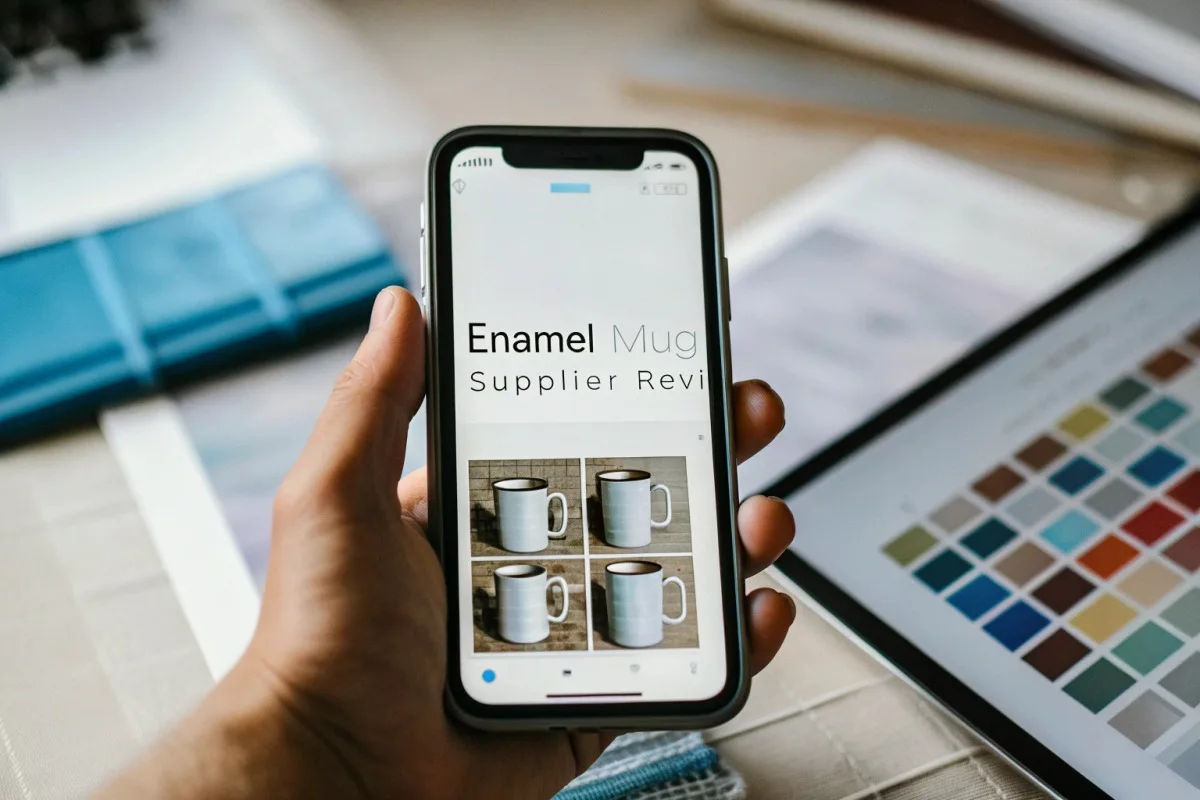
Start With Visual Platforms
Instagram and TikTok dominate supplier vetting in 2025. Data shows 40% of B2B sourcing decisions now involve short-form video reviews 4. Search hashtags like #enamelmugfactory or #custommugsupplier. Look for unboxing videos. Real buyers show real products.
On our production line, we encourage clients to share their received orders. These posts help future buyers verify quality. Look for similar content from suppliers you are considering.
Explore Professional Networks
LinkedIn offers a different perspective. Search for the supplier's company page. Check employee profiles. Read comments on their posts. Professional networks tend to show polished content, but the comments often reveal truth.
Join Industry Communities
Reddit and Facebook groups provide unfiltered feedback. Join groups like "Alibaba Sourcing Tips" or "Custom Product Manufacturing." Use the search function within these groups. Type the supplier name. You will find discussions you cannot find anywhere else.
Platform Comparison Table
| Platform | Type of Content | Reliability Level | Best For |
|---|---|---|---|
| Photos, Reels | Medium-High | Visual quality checks | |
| TikTok | Unboxing videos | High | Real product reveals |
| Company updates | Medium | Professional reputation | |
| Facebook Groups | Discussions | High | Unfiltered experiences |
| Anonymous feedback | High | Honest complaints | |
| Alibaba Forums | Buyer reviews | Medium | Trade-specific issues |
Use Smart Search Strategies
Do not just search the supplier name. Try variations. Search "supplier name + scam" or "supplier name + delay." Search in Chinese if the factory is in China. Use Google Translate if needed. Some complaints only appear in the local language.
We have seen suppliers change names after bad reviews pile up. Search their address or phone number too. This catches rebranded factories trying to escape their reputation.
In our experience shipping to the United States, Germany, and Australia, delivery complaints top the list of buyer frustrations. Social media reveals patterns that supplier catalogs hide.
Red flags include multiple complaints about 2-4 week delays, excuses blaming shipping companies, silence when buyers ask about order status, and sudden communication gaps near delivery dates. Also watch for suppliers who delete negative comments or block complaining customers.

Pattern Recognition Matters
One complaint means little. Three complaints about the same issue signal a problem. Five complaints demand attention. Scroll through several months of posts. Check if delivery complaints cluster around certain seasons. Some factories struggle during Chinese New Year 5 or peak shipping periods.
Our factory plans production schedules 8-12 weeks ahead specifically to avoid these bottlenecks. Look for suppliers who discuss their capacity planning openly.
Watch How They Respond
Response style tells you everything. Good suppliers acknowledge problems publicly. They offer solutions. They follow up. Bad suppliers delete comments, respond defensively, or ignore complaints entirely.
Delivery Red Flag Checklist
| Red Flag | What It Looks Like | Risk Level |
|---|---|---|
| Multiple delay complaints | "Still waiting after 6 weeks" | High |
| Blame-shifting | "Shipping company lost it" | Medium-High |
| Deleted comments | Missing negative replies | High |
| No tracking info | "We shipped it, trust us" | High |
| Communication gaps | Days without response | Medium |
| Unrealistic promises | "Ships in 3 days worldwide" | High |
Check Competitor Comments
Sometimes buyers compare suppliers in their posts. "Switched from Supplier A to Supplier B because of delays." These comparative comments provide valuable context. The buyer already did research for you.
Look Beyond Official Pages
Search tagged posts, not just the supplier's own content. Real customers tag suppliers when complaining. These posts appear on customer profiles, not supplier pages. Suppliers cannot delete them.
When we receive feedback on social media, we respond within 24 hours. This commitment to transparency builds trust. Look for similar responsiveness from potential partners.
Our quality control team reviews supplier portfolios daily. We have learned to spot fake testimonials quickly. This skill protects your business from costly mistakes.
Distinguish genuine feedback by checking reviewer profiles for history and diversity, looking for specific details with photos, noting linguistic patterns that suggest AI or templates, and verifying engagement rates. Genuine reviews mention specific products, timelines, and problems. Fake reviews use generic praise without details.

Profile Investigation Techniques
Click on reviewer profiles. Check their post history. Real buyers have diverse content. They post about their lives, other products, different topics. Fake accounts often have sparse histories, recent creation dates, or only review-related posts.
Linguistic Analysis
AI tools now flag 30-50% of supplier testimonials as suspicious. You can spot patterns manually too. Generic phrases like "excellent quality" or "highly recommend" without specifics suggest fake reviews. Real buyers mention exact problems: "The blue color was darker than the sample" or "Handles arrived bent on 12 mugs."
Fake vs. Genuine Review Comparison
| Characteristic | Fake Review | Genuine Review |
|---|---|---|
| Detail level | "Great product, fast shipping" | "Received 200 mugs in 3 weeks, 5 had small chips" |
| Photos | Stock images or none | Real product photos with timestamps |
| Profile history | New account, few posts | Established account, varied content |
| Engagement | Likes from other new accounts | Comments from real connections |
| Language | Perfect grammar, generic praise | Natural writing, specific complaints |
| Timing | Multiple reviews same day | Spread over time after purchases |
The Photo Test
Genuine buyers share real photos. Use Google Reverse Image Search 6. Drag photos into the search bar. Fake reviews often use stock images or photos stolen from other sources. Real customer photos appear once, on that single post.
Engagement Rate Analysis
Healthy supplier accounts show 5-10% engagement on review posts. Below 2% signals fake followers or inactive accounts. Calculate engagement by dividing likes plus comments by follower count. Do this for several posts to find patterns.
Cross-Reference Everything
Never rely on one source. Combine social media findings with:
- Alibaba ratings and trade assurance records
- Direct references from the supplier
- Sample orders you evaluate personally
Our team provides references from existing clients. Legitimate suppliers welcome this verification process. Hesitation suggests something to hide.
When we calibrate printing equipment for complex designs, we photograph every stage. These photos prove capability. Smart buyers search for similar evidence from potential suppliers.
Validate design capability by examining customer-shared photos of custom orders, comparing finished products to original designs, checking for consistent color accuracy across multiple posts, and looking for evidence of complex customization like wraparound prints or gradient effects. Request tagged customer content, not just supplier portfolio shots.

Search Customer Tags First
Supplier portfolios show their best work. Customer posts show reality. Search for photos where customers tagged the supplier. These unfiltered images reveal true quality. Look for color accuracy, print sharpness, and enamel finish consistency.
Common Design Issues to Watch
Our production team sees these problems from competing factories:
- Color fading after one wash
- Print alignment errors on curved surfaces
- Thin enamel chipping at rim edges
- Handle attachment weakness
- Inconsistent gloss finish
Search for mentions of these specific issues in comments and reviews.
Visual Quality Checklist
| Design Element | What to Check | Where to Look |
|---|---|---|
| Color accuracy | Match between design file and product | Customer comparison photos |
| Print sharpness | Clear edges, no bleeding | Close-up product shots |
| Enamel thickness | Even coating, no thin spots | Side-angle photos |
| Handle attachment | Clean welds, no gaps | Detail photos |
| Rim finish | Smooth edge, consistent coating | Top-down images |
| Overall consistency | Same quality across batch | Multiple customer posts |
Request Specific Evidence
Contact customers who posted reviews. Ask about their experience. Most buyers happily share details. This direct feedback provides information social posts cannot capture.
Test With Your Own Order
After social media research, order samples. Send a complex design. Include fine text, gradients, or multiple colors. This tests capability better than any review. At our facility, we encourage sample orders because they build confidence.
Document Your Findings
Create a folder for each potential supplier. Save screenshots of relevant posts. Note dates and usernames. This documentation helps compare suppliers and protects you if disputes arise later. Structured vetting processes cut bad supplier choices by 40% according to industry data.
Conclusion
Social media reviews transform supplier vetting from guesswork into informed decision-making. Use these strategies to protect your custom enamel mug investment and build partnerships that last.
Footnotes
1. Defines and explains B2B marketplaces and platforms, their functions, and benefits for businesses. ↩︎
2. Provides an authoritative overview of Alibaba Group, including Alibaba.com as a major B2B trading platform. ↩︎
3. Provides an authoritative overview of the supplier selection process, its stages, and key criteria. ↩︎
4. Discusses the significant impact of short-form video content and testimonials on consumer purchasing decisions. ↩︎
5. Explains the cultural significance of Chinese New Year and its substantial impact on global supply chains and manufacturing. ↩︎
6. Details the functionality and various uses of Google’s reverse image search feature for verification and information. ↩︎