
Last month, one of our US clients received a container of 5,000 custom enamel mugs cargo value 1. Over 300 pieces arrived with chipped enamel edges. Without proper shipping insurance 2, this damage meant a $4,500 loss that nobody wanted to absorb.
To evaluate and buy shipping insurance for custom enamel mugs, first calculate your total shipment value including production and freight costs. Then compare coverage options between your freight forwarder, manufacturer, and independent providers. Choose all-risk policies that specifically cover fragile goods, and ensure coverage limits match your declared value.
This guide will walk you through every step of evaluating, comparing, and purchasing the right shipping insurance for your enamel mug orders all-risk policies 3. Let’s dive into the details that protect your investment.
How do I determine if the cost of shipping insurance is worth it for my custom enamel mug order?
When we ship containers from our Huizhou facility, we always discuss insurance with clients first marine cargo insurance 4. Many buyers skip this conversation and regret it later. The real question isn't whether you can afford insurance. It's whether you can afford the loss without it.
Shipping insurance is worth it when your total shipment value exceeds $500, when ordering fragile enamelware in bulk, or when shipping internationally from China. Calculate the premium cost against potential loss—typically 0.3% to 1.5% of cargo value. For most custom mug orders, spending $15-50 on insurance protects thousands in inventory.
Understanding Your True Shipment Value
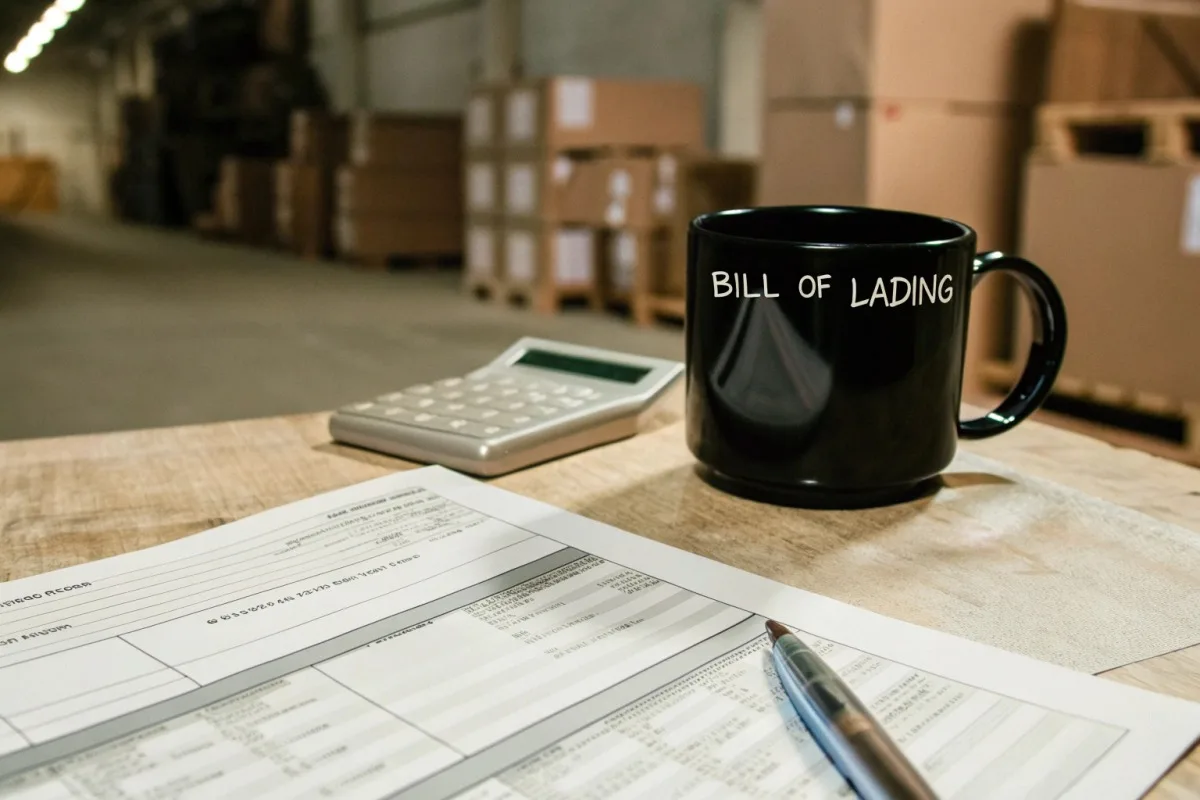
Many buyers underestimate what they're actually risking. Your shipment value isn't just the product cost. It includes production fees, custom printing charges, packaging materials, inland freight to the port, ocean freight, duties, and taxes.
Here's a real example from our recent shipment to Los Angeles:
| Cost Component | Amount (USD) |
|---|---|
| 2,000 mugs at $3.50 each | $7,000 |
| Custom printing setup | $150 |
| Inner packaging | $200 |
| Export cartons | $180 |
| Inland freight to Shenzhen port | $120 |
| Ocean freight FOB to LA | $850 |
| US customs duties (estimated) | $490 |
| Total at Risk | $8,990 |
Insurance for this shipment cost $89. That's 0.99% of the total value. When you see it this way, the math becomes clear.
Risk Factors Specific to Enamel Mugs
Our production team handles thousands of enamel mugs daily. We know exactly where damage happens. The enamel coating is glass-based. It chips when mugs knock against each other. It cracks under sudden temperature changes. It scratches when dragged across rough surfaces.
During ocean transit, containers experience vibration, humidity changes, and rough handling at ports. A forklift operator in a hurry can drop a pallet. Storms cause containers to shift. These aren't rare events. They happen regularly.
The Break-Even Calculation
Ask yourself: What percentage of damage can I absorb before losing money on this order?
Consider this scenario:
- Order value: $5,000
- Insurance cost: $50
- Your profit margin: 30%
- Break-even damage threshold: $167 worth of mugs (about 47 pieces at $3.50)
If more than 47 mugs arrive damaged, insurance would have saved you money. From our experience, bulk enamel mug shipments see 1-5% damage rates without proper packaging. On 2,000 mugs, that's 20-100 pieces. Insurance makes sense.
When to Skip Insurance
Small orders under $500 shipped via express courier often include basic carrier coverage. If you're testing a new supplier with a 50-piece sample order worth $200, the built-in $100 carrier liability might be enough. But for production orders, never skip proper coverage.
What specific types of transit damage are covered by my insurance policy for fragile enamelware?
Our quality control team inspects every shipment before it leaves our warehouse. But once containers leave our gates, we can't control what happens. Understanding what your insurance actually covers prevents surprises during claims.
Standard marine cargo insurance for enamel mugs covers physical damage from impacts, drops, and crushing; water damage from leaks or humidity; theft and pilferage; fire; and total loss from vessel sinking. However, coverage excludes damage from inadequate packaging, inherent product defects, and gradual deterioration. Always request "all-risk" coverage for fragile enamelware.
All-Risk vs. Named Perils Policies
Insurance policies fall into two main categories. Understanding the difference saves headaches later.
| Policy Type | What's Covered | What's Excluded | Best For |
|---|---|---|---|
| All-Risk (Institute Cargo Clause A 5) | Everything except specific exclusions | Inherent vice, insufficient packing, delay, insolvency | High-value custom orders, fragile goods 6 |
| Named Perils (ICC B or C) | Only listed events like fire, sinking, collision | Anything not specifically named | Low-value, durable goods |
For enamel mugs, always choose All-Risk coverage. Named perils policies often exclude "breakage of fragile goods" unless caused by a covered event. That loophole can void your claim.
Common Damage Types We See
From our shipping records, here's what happens to enamel mugs in transit:
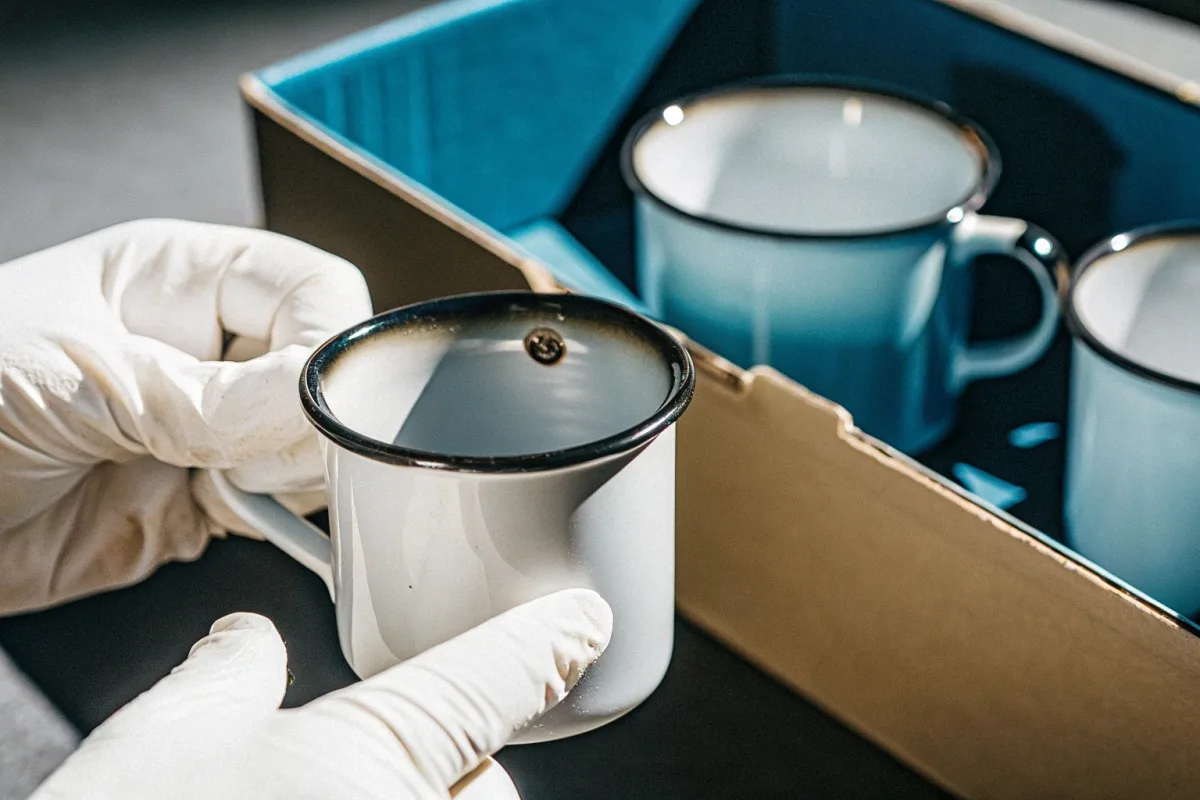
Chipping: The most frequent issue. Enamel edges chip when mugs contact each other or hard surfaces. This happens during container loading, rough seas, or warehouse handling.
Denting: The steel core bends under pressure. Stacked pallets, falling objects, or forklift impacts cause dents. The mug still functions but looks defective.
Scratching: Surface scratches occur when mugs rub together without proper separation. This damages custom printing and the glossy finish.
Handle Breakage: Though rare with quality mugs, handles can snap under extreme stress during drops or crushing incidents.
Water Damage: Container condensation (called "container rain") or actual flooding creates rust spots and stains on steel surfaces. Even rust-resistant enamel can't prevent damage from prolonged moisture exposure.
Coverage Exclusions to Watch
Insurance companies use specific language to deny claims. Watch for these exclusions:
Insufficient packaging: If the adjuster determines your packaging didn't meet industry standards for fragile goods, your claim gets denied. This is the most common reason for rejection.
Inherent vice: This means damage caused by the product's own nature. If enamel chips during normal handling because it was poorly applied, that's inherent vice—not covered.
Delay damage: If your shipment sits in a hot container for weeks due to port congestion and the enamel discolors, delay-related damage typically isn't covered.
Gradual deterioration: Slow degradation over time doesn't qualify. The damage must result from a sudden event.
Reading Your Policy Document
Request the full policy wording before purchasing. Look for these key sections:
- Covered perils (what events trigger coverage)
- Exclusions (what's specifically not covered)
- Deductible amount (what you pay before insurance kicks in)
- Coverage limits (maximum payout per shipment)
- Claims notification period (how quickly you must report damage)
How can I ensure my insurance claim is approved if my mugs arrive with quality issues or shipping damage?
We've helped dozens of clients navigate claims over the years. The difference between approved and denied claims often comes down to documentation. Prepare before shipping, not after damage occurs.
To ensure claim approval, document everything before shipping with photos, packing lists, and commercial invoices. Upon receiving damaged goods, photograph all damage immediately, keep all original packaging, notify your insurer within 24-48 hours, and obtain an independent surveyor's report for large claims. Never dispose of damaged items until the claim is fully resolved.
Pre-Shipment Documentation Checklist
Start your claim file before the container leaves China. Here's what we provide our clients:
| Document | Purpose | Who Provides |
|---|---|---|
| Commercial invoice | Proves declared value | Manufacturer |
| Packing list | Details quantity and packaging method | Manufacturer |
| Pre-shipment photos | Shows condition before shipping | Manufacturer |
| Quality inspection report 7 | Confirms goods met standards | Third-party or manufacturer |
| Bill of lading 8 | Proves shipping details | Freight forwarder |
| Insurance certificate | Confirms coverage | Insurance provider |
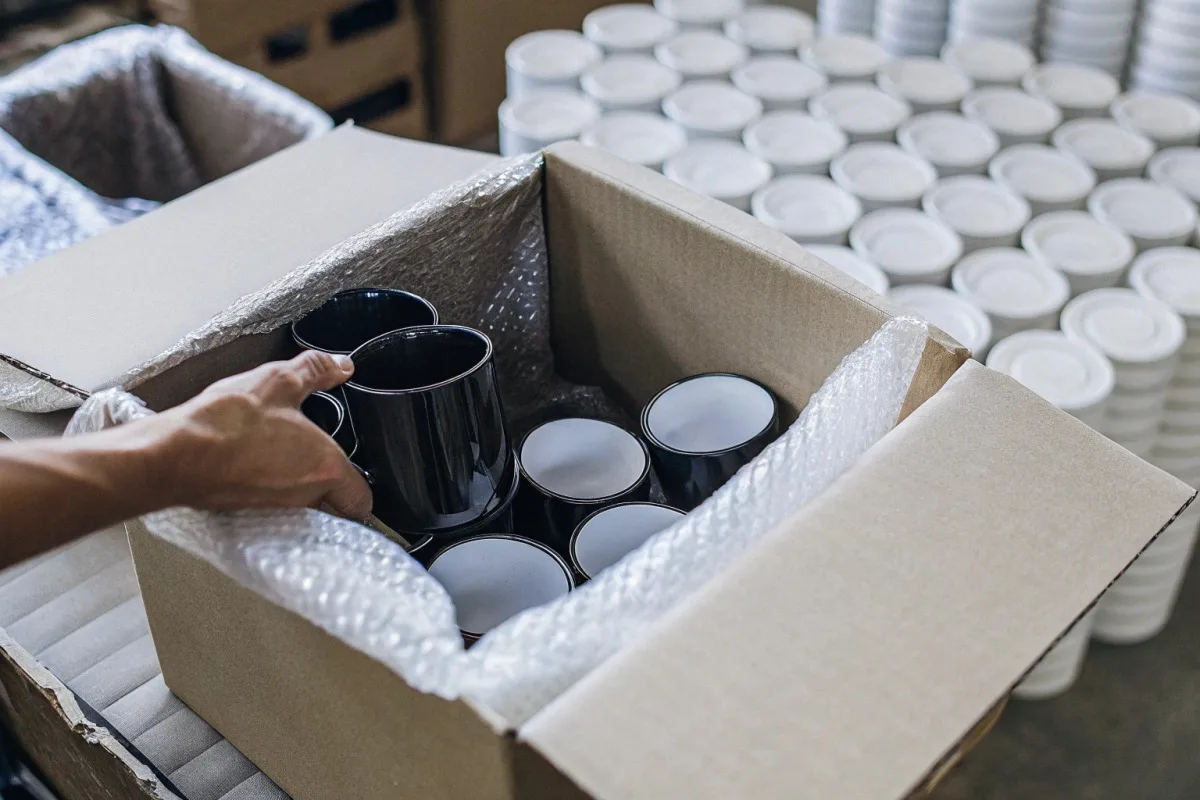
We photograph every pallet before wrapping. We take close-ups of individual mugs showing perfect condition. These photos become critical evidence if claims arise.
Receiving Damaged Goods: Step-by-Step Process
When your shipment arrives, follow this exact sequence:
Step 1: Inspect before signing. Check for visible container damage. Note any dents, holes, or broken seals on the delivery receipt. Write "subject to inspection" if you can't fully examine contents immediately.
Step 2: Photograph everything. Take wide shots of the container exterior. Document how cartons are positioned inside. Photograph damaged cartons before opening. Then photograph damaged products inside those cartons.
Step 3: Count and categorize. Sort damaged items by type: chips, dents, scratches, broken handles. Count each category separately.
Step 4: Preserve packaging. Keep all cartons, inner packaging, and wrapping materials. Adjusters need to see how items were packed.
Step 5: Notify immediately. Contact your insurer within 24 hours. Most policies require notification within 3 days. Delays can void coverage.
The Claims Submission Package
Your claim submission should include:
- Completed claim form (provided by insurer)
- Copy of insurance certificate or policy
- Commercial invoice showing goods value
- Packing list with quantities
- Bill of lading
- Pre-shipment photos (from manufacturer)
- Damage photos (taken upon receipt)
- Inventory of damaged items with values
- Written statement describing how damage was discovered
- Repair estimates or replacement quotes
For claims over $5,000, most insurers require an independent surveyor's report. Request this within 48 hours of discovering damage. Surveyor fees typically range from $200-500 and are usually reimbursable as part of your claim.
Common Reasons Claims Get Denied
Learn from others' mistakes:
Late notification: Missing the reporting deadline is automatic denial. Set calendar reminders when expecting shipments.
Insufficient documentation: "The mugs were damaged" isn't enough. You need photos, counts, and specific descriptions.
Disposing of evidence: Never throw away damaged goods or packaging until your claim is fully settled and paid.
Underinsurance: If you declared $5,000 but the true value was $8,000, you might only receive proportional payment.
Packaging failures: If standard industry packaging wasn't used, expect denial. For enamel mugs, this means individual wrapping, cell dividers, and double-walled cartons.
Should I buy shipping insurance through my Chinese manufacturer or use an independent provider?
Our clients often ask us to arrange insurance. We can do it, but it's not always the best choice for you. Understanding your options helps you make smarter decisions.
The best insurance source depends on your shipping volume and control preferences. Manufacturers offer convenience but limited coverage options. Freight forwarders provide competitive rates with established carrier relationships. Independent providers offer maximum coverage flexibility but require more buyer involvement. For orders over $10,000, independent providers typically offer better terms.
Comparing Your Insurance Sources
Each option has distinct advantages and drawbacks:
| Insurance Source | Pros | Cons | Best For |
|---|---|---|---|
| Manufacturer (us) | Simple, one-point contact, included in quote | Limited options, potential conflict of interest in claims | Small orders, new buyers, those wanting simplicity |
| Freight forwarder | Competitive rates, shipping expertise, handles documentation | Coverage may favor carrier relationships | Medium orders, regular shippers |
| Independent provider | Maximum coverage options, buyer-aligned claims support, policy customization | More paperwork, requires buyer management | Large orders, high-value shipments, experienced importers |
| Credit card coverage | Free, automatic | Very limited amounts ($500-1,000 typical max) | Sample orders only |
When Manufacturer-Arranged Insurance Works
We arrange insurance for about 40% of our shipments. This works well when:
- Order value is under $5,000
- You're a first-time buyer unfamiliar with the process
- You want everything handled in one relationship
- Speed matters more than policy customization
When we arrange insurance, we typically use our freight forwarder's policy. Coverage is standard marine cargo with all-risk provisions. We add you as a named beneficiary. If damage occurs, you file claims through us, and we coordinate with the insurer.
The downside: We're not insurance experts. Complex claims might not get the aggressive advocacy an independent broker would provide. There's also inherent tension—we want smooth shipments, which could subtly influence damage assessments.
When to Use Independent Providers
For orders over $10,000 or regular monthly shipments, consider independent marine cargo insurers. Names like Chubb, Allianz Global, AIG, and Lloyd's syndicates specialize in cargo coverage.
Independent providers offer:
Higher coverage limits: Up to millions in coverage per shipment, versus typical $50,000-100,000 limits through freight forwarders.
Customizable policies: Add coverage for exhibition samples, buyer's contingent interest, or warehouse storage.
Annual policies: If you ship monthly, annual policies provide better rates than per-shipment coverage.
Claims advocacy: Independent brokers work for you, not the shipping chain. They fight harder for full payouts.
The Freight Forwarder Middle Ground
Many experienced importers use their freight forwarder's insurance. This balances convenience with reasonable coverage.
Freight forwarders handle thousands of shipments. They negotiate bulk rates with insurers. They know which claims get approved and how to document shipments properly.
Ask your forwarder:
- What's the per-shipment coverage limit?
- Which underwriter backs the policy?
- What's the deductible?
- How are claims processed?
- Can you provide sample policy wording?
Cost Comparison Example
For a $15,000 shipment of custom enamel mugs from Shenzhen to Chicago:
| Provider Type | Typical Premium | Deductible | Coverage Limit |
|---|---|---|---|
| Manufacturer-arranged | $150-225 (1-1.5%) | $250-500 | $15,000 |
| Freight forwarder | $120-180 (0.8-1.2%) | $100-250 | $50,000 |
| Independent broker | $90-150 (0.6-1%) | $100-500 | $100,000+ |
Independent brokers often have lower rates because they shop multiple underwriters. But they require more involvement from you—completing applications, providing shipment details, managing certificates.
Our Recommendation
For new importers placing their first few orders, let your manufacturer or freight forwarder handle insurance. Learn the process with lower stakes.
Once you're shipping regularly—say, monthly orders averaging $10,000+—engage an independent marine cargo broker. They'll structure annual coverage that reduces per-shipment costs and provides superior claims support.
Whatever you choose, get proper documentation. Confirm coverage before shipment. Understand exclusions. Prepare for claims before they happen.
Conclusion
Shipping insurance protects your custom enamel mug investment from the unpredictable. Evaluate costs against your shipment value, understand exactly what's covered, document thoroughly, and choose the right provider for your volume. Start with your next order.
Footnotes
1. Explains the basis for calculating insurance premiums. ↩︎
2. Explains the purpose and importance of shipping insurance. ↩︎
3. Describes a comprehensive type of insurance coverage. ↩︎
4. Explains the scope of marine cargo insurance. ↩︎
5. The original link was inaccessible. Replaced with a comprehensive and recent article from an authoritative source (Insure24) that explains Institute Cargo Clause A in detail, along with B and C. ↩︎
6. Defines a category of items requiring special insurance. ↩︎
7. Highlights a document confirming product quality before shipment. ↩︎
8. Explains the function of a crucial shipping document. ↩︎