
Every year, our production floor sees orders returned because buyers skipped one critical step food safety compliance 1. A missing certification here. An unclear coating specification there. These small oversights snowball into costly delays, damaged relationships, and wasted inventory sitting in warehouses.
To create a comprehensive sourcing checklist for custom enamel mugs, you must evaluate supplier credentials, material specifications, production processes, customization methods, quality control protocols, compliance certifications, logistics terms, and consistency measures. This systematic approach prevents overlooked details and ensures reliable, long-term supplier partnerships.
The following sections break down each critical element you need in your checklist OEM capability 2. We will cover inspection standards, OEM verification, logistics criteria, and quality consistency. Let us build your bulletproof sourcing framework together.
What quality control standards should I include in my enamel mug inspection checklist?
When our quality team inspects finished batches, they follow a rigid protocol developed over thousands of orders statistical process control data 3. Skipping any step risks shipping defective mugs that chip on first use or fail food safety tests at customs.
Your enamel mug inspection checklist should include material verification, enamel coating thickness tests, adhesion checks, visual defect inspection, dimensional accuracy, food safety compliance, print durability tests, and packaging integrity. Each checkpoint must have clear pass/fail criteria documented before production begins.
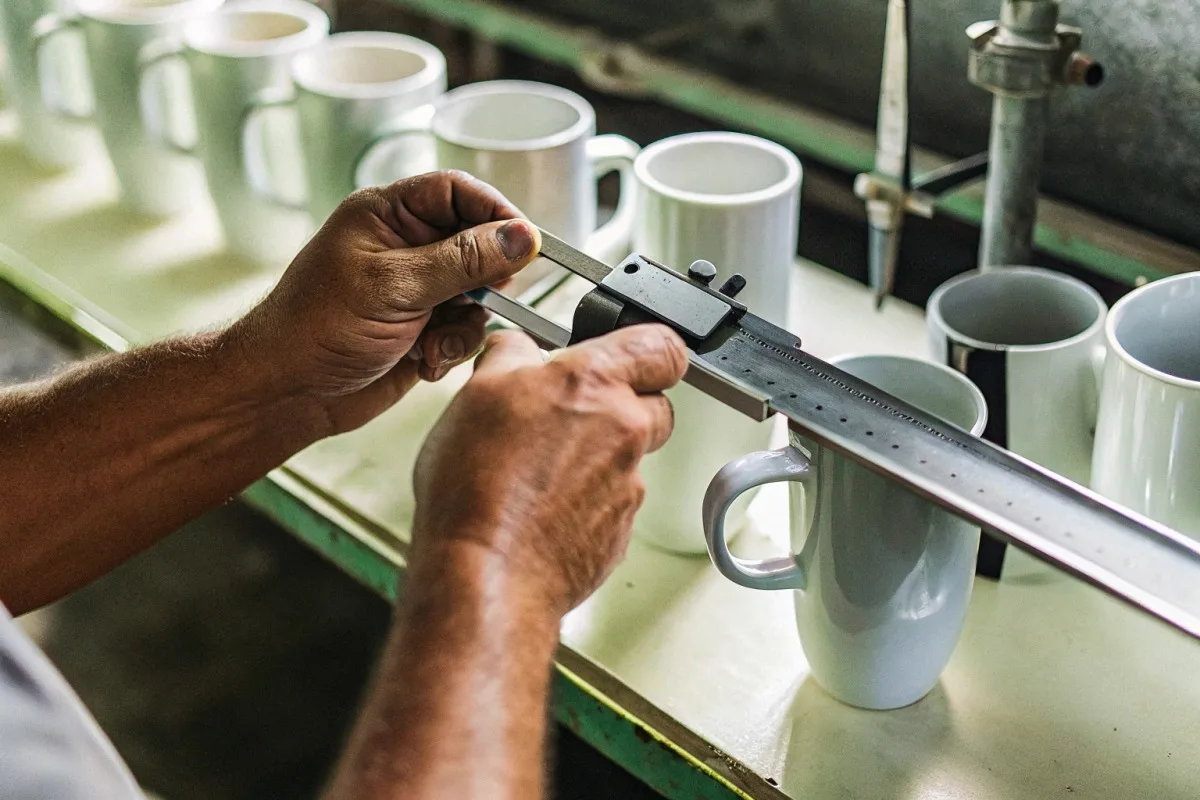
Understanding the Multi-Stage Inspection Process
Enamel mugs go through multiple production stages. Each stage requires its own inspection checkpoint. Our facility conducts checks after metal forming, after each enamel firing, after customization, and before final packaging.
Metal forming inspection verifies the steel gauge meets specifications. We check for dents, uneven edges, and welding quality on handles and rims. A poorly welded handle will fail under normal use. Rim smoothness matters because rough edges cause lip injuries.
Enamel coating inspection happens after each firing. The base coat must bond completely to the metal. The color coat must cover evenly without bare spots. We use adhesion tests where technicians scratch the surface with standardized tools. Good enamel resists scratching. Bad enamel flakes immediately.
Critical Quality Checkpoints Table
| Inspection Stage | What to Check | Pass Criteria | Common Defects |
|---|---|---|---|
| Metal Forming | Steel thickness, weld strength | 0.4-0.6mm gauge, no visible gaps | Dents, uneven rims, weak welds |
| Base Coat Firing | Enamel adhesion, coverage | No bare spots, passes scratch test | Fish-scaling, crawling, bubbles |
| Color Coat Firing | Color accuracy, surface smoothness | Matches Pantone reference, no bumps | Color variation, orange peel texture |
| Customization | Print alignment, durability | Centered design, survives wash test | Off-center prints, fading, peeling |
| Final Packaging | Box integrity, padding | No movement inside box | Crushed corners, insufficient cushioning |
Testing Methods You Should Require
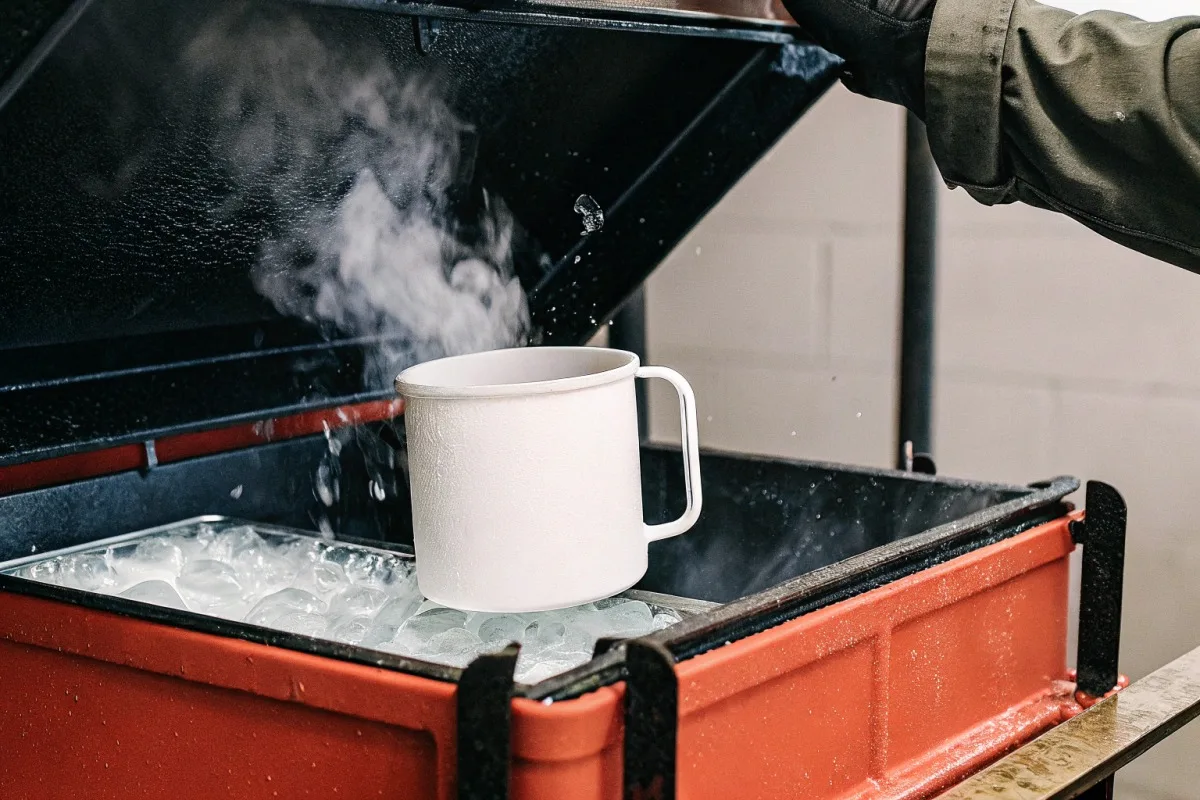
Thermal shock testing 4 reveals hidden enamel weaknesses. Mugs are heated then rapidly cooled. Poor-quality enamel cracks during this test. Good enamel survives multiple cycles.
Dishwasher simulation tests print durability. Mugs run through 50 wash cycles. Ceramic-fired decals remain intact. Sublimation prints often fade significantly. This test separates premium suppliers from budget ones.
Drop testing checks structural integrity. A standard test involves dropping mugs from one meter onto concrete. Double-coated mugs dent but keep their enamel. Single-coated mugs often chip on impact.
Food contact tests verify safety. Reputable labs test for lead and cadmium migration 5. Results must fall within FDA and LFGB limits. Never accept supplier self-certifications without third-party verification.
How do I verify if a manufacturer can meet my specific OEM design requirements?
Our design team collaborates with brands weekly on custom specifications. Some requests seem simple but require advanced capabilities. Not every factory can execute every design. Verification saves months of frustration.
Verify OEM capability by requesting factory videos showing each production stage, reviewing past custom projects similar to yours, ordering physical samples with your exact specifications, confirming their customization methods match durability requirements, and checking their design file compatibility with your artwork formats.

Evaluating Customization Method Compatibility
Different customization methods suit different design needs. Your checklist must specify which method matches your brand requirements.
Ceramic decals fired into enamel offer maximum durability. The design becomes part of the enamel itself. These prints survive campfires, dishwashers, and years of daily use. However, this method requires minimum order quantities and longer lead times.
Screen printing works for simpler designs with fewer colors. Setup costs are lower. Print quality is good for logos and text. Complex gradients do not reproduce well.
Sublimation printing attracts budget buyers. It allows full-color photographic prints at low minimums. However, sublimation fades quickly. It cannot withstand high heat. Our production team refuses sublimation for clients selling campfire-rated products.
Design Capability Verification Checklist
| Verification Step | Why It Matters | How to Verify |
|---|---|---|
| File Format Support | Ensures accurate reproduction | Send test files in AI, EPS, PDF formats |
| Color Matching | Prevents brand inconsistency | Request Pantone-matched samples |
| Print Area Limits | Affects design placement | Get exact templates with safe zones |
| Minimum Detail Size | Small text may blur | Send designs with fine lines for proofing |
| Coating Compatibility | Some prints reject certain enamels | Ask for method-specific material samples |
Questions to Ask Potential OEM Partners
Ask for their production capacity. A factory running at full capacity cannot prioritize your urgent orders. Ideal partners operate at 70-80% capacity with room for your business.
Request references from similar projects. If you sell camping gear, ask for outdoor brand references. If you serve cafes, ask for foodservice examples. Past success predicts future performance.
Inquire about their design revision policy. Good factories allow two or three rounds of sample revisions. Factories refusing any revisions signal inflexibility.
Confirm intellectual property protection. Your custom designs should remain confidential. Request non-disclosure agreements 6. Factories serving your competitors may leak designs without proper contracts.
Sample Evaluation Protocol
Order samples before committing to production orders. Test them yourself. Hand wash them daily for two weeks. Run them through your dishwasher. Use them around campfires if marketing them for outdoor use.
Document every observation. Does the handle feel comfortable? Does the rim feel smooth on lips? Does the color match your brand guidelines? These details matter to your end customers.
Compare samples from three suppliers minimum. Price differences often reflect quality differences. The cheapest sample usually reveals quality shortcuts upon close inspection.
What logistics and lead time criteria should I add to my sourcing process?
Shipping delays destroyed several partnerships we witnessed over the years. A brand missed their holiday launch because their supplier underestimated lead times. Their competitor captured the entire seasonal market. Proper logistics planning prevents such disasters.
Your logistics criteria should cover realistic production lead times, shipping method options, port accessibility, customs documentation accuracy, packaging specifications for transit protection, contingency buffers for delays, and clear communication protocols for tracking updates throughout the supply chain process.
Breaking Down Realistic Lead Times
Total lead time includes multiple phases. Each phase needs its own timeline estimate. Our project managers break orders into these standard phases.
Sample development takes 7-14 days. This includes design confirmation, material preparation, and sample production. Rush samples are possible but cost extra.
Production time varies by order size and complexity. Standard orders of 1,000-5,000 units need 25-35 days. Larger orders or complex customizations need 45-60 days.
Quality inspection adds 3-5 days. Third-party inspections require scheduling in advance. Never skip this step to save time.
Shipping depends on method and destination. Sea freight to the US West Coast takes 14-21 days. East Coast adds another 7-10 days. Air freight takes 5-7 days but costs significantly more.
Lead Time Planning Table
| Order Phase | Standard Timeline | Factors Affecting Duration |
|---|---|---|
| Sample Development | 7-14 days | Design complexity, revision rounds |
| Pre-Production | 5-7 days | Material sourcing, tooling setup |
| Production | 25-60 days | Order quantity, customization method |
| QC Inspection | 3-5 days | Third-party scheduling, sample size |
| Packing & Loading | 2-3 days | Packaging complexity, container availability |
| Sea Freight | 14-30 days | Origin/destination ports, routing |
| Customs Clearance | 3-7 days | Documentation accuracy, inspection risk |
Shipping Method Comparison
Sea freight suits large orders with flexible timelines. Container costs spread across thousands of units keep per-unit shipping low. Full container loads offer better rates than less-than-container loads.
Air freight makes sense for urgent small orders or samples. Per-unit costs are higher. However, faster delivery sometimes justifies the expense for time-sensitive launches.
Express couriers work for sample shipments under 30 kilograms. DHL, FedEx, and UPS reach most destinations within a week. Tracking is excellent. Costs per unit are highest.
Documentation Requirements
Accurate commercial invoices prevent customs delays. Invoice details must match packing lists exactly. Discrepancies trigger inspections that add days or weeks.
Certificates of origin may affect import duties. Some trade agreements offer preferential rates. Your customs broker can advise on requirements for your specific market.
Food contact certifications must accompany shipments. Customs officials may request proof of FDA or LFGB compliance. Missing documentation causes port holds and storage fees.
How can I ensure my supplier maintains consistent quality for my private-label brand?
Our longest client relationship spans over eight years. Consistency built that trust. They receive identical quality whether ordering in January or July, whether ordering 500 units or 50,000. Consistency requires systems, not luck.
Ensure consistent quality by establishing detailed product specifications as binding standards, implementing regular quality audits, requiring statistical process control data, building relationships with supplier quality managers, creating feedback loops for continuous improvement, and diversifying suppliers to maintain leverage and reduce dependency risk.

Creating Binding Product Specifications
Vague specifications allow quality drift. Detailed specifications create accountability. Your spec sheet becomes the contract standard against which every shipment is measured.
Specify exact material requirements. Steel gauge, enamel type, coating thickness, and rim construction must have numerical standards. "Good quality enamel" means nothing. "Double-coat enamel, minimum 0.3mm total thickness, fired at 1,100°C minimum" means everything.
Document color standards with physical references. Digital colors vary between screens. Physical Pantone chips or approved sample swatches become the master standard.
Define acceptable defect rates. Zero defects is unrealistic. Industry standard allows 2-3% minor defects for promotional products. Premium brands may require under 1%. Your tolerance level must be explicit.
Quality Monitoring Systems
Regular audits catch problems before they become patterns. Quarterly factory visits demonstrate your commitment to quality. Suppliers prioritize clients who show up.
Pre-shipment inspections should follow AQL sampling standards 7. Inspection companies like SGS or Bureau Veritas provide impartial assessments. Their reports document conditions at shipment time.
Production milestone updates keep you informed. Request photos at metal forming completion, after first firing, after customization, and during packing. This visibility catches issues early.
Building Long-Term Supplier Relationships
Relationships matter in manufacturing. Suppliers prioritize partners who pay on time, communicate clearly, and treat factory staff respectfully. Transactional buyers get transactional service.
Share your sales forecasts. Suppliers who understand your growth plans can prepare capacity. Surprise orders strain production schedules and compromise quality.
Provide constructive feedback on every shipment. Document what worked well. Document what needs improvement. Suppliers who receive feedback can improve. Suppliers who receive silence cannot.
Contingency Planning for Quality Issues
Even excellent suppliers occasionally have problems. Your checklist needs contingency protocols.
Define replacement and refund terms before issues arise. What happens if a shipment fails inspection? Who pays for replacements? Who pays for shipping? These answers belong in your initial agreement.
Identify backup suppliers. Depending entirely on one factory creates vulnerability. Qualifying a second supplier takes months. Start the process before you need it.
Document every quality issue thoroughly. Photos, measurements, and specific batch details enable root cause analysis. Patterns reveal systemic problems requiring systemic solutions.
Conclusion
A comprehensive sourcing checklist protects your brand, your budget, and your customer relationships. Cover quality standards, OEM verification, logistics planning, and consistency measures. Start using this framework today.
Footnotes
1. Provides official guidelines for food safety management systems in manufacturing. ↩︎
2. Defines Original Equipment Manufacturer (OEM) and its role in product branding and supply chains. ↩︎
3. Describes Statistical Process Control (SPC) as a method for monitoring and improving manufacturing quality. ↩︎
4. Explains the purpose and methodology of thermal shock testing for material durability. ↩︎
5. Details the regulatory limits and testing for hazardous metal migration in food contact items. ↩︎
6. Provides a legal definition and explanation of non-disclosure agreements for protecting confidential information. ↩︎
7. Explains the Acceptable Quality Limit (AQL) as a statistical tool for quality control inspections. ↩︎