Every shipment of custom enamel mugs that leaves our Huizhou facility represents our reputation LFGB 1. Yet we know that buyers need independent verification. The wrong inspection agency can miss critical defects or cause costly delays.
To choose a third-party inspection agency for custom enamel mugs from China, verify their experience with enamelware, check international accreditations like ISO 9001, confirm inspectors understand FDA and LFGB food-contact standards, and ensure they have local presence in your supplier’s manufacturing region for efficient scheduling.
This guide walks you through practical steps to select, verify, and work with inspection agencies REACH 2. You will learn what questions to ask, what red flags to avoid, and how to use inspection results effectively.
What should I look for when choosing a third-party inspection agency for my enamel mug order?
Our production team works with various inspection agencies monthly. We have seen excellent inspectors catch subtle enamel defects. We have also seen unqualified ones miss obvious problems. The difference comes down to specific criteria.
Look for agencies with enamelware experience, ISO accreditation, inspectors in China's manufacturing hubs, clear English reporting with photos, and services covering pre-production through loading supervision. Verify they understand AQL sampling and food-contact safety standards specific to enamel mugs.

Core Selection Criteria
When evaluating inspection agencies, focus on these fundamental requirements first. An agency may have a great website but lack actual expertise in your product category.
Start by asking for references from clients who import similar products. Enamelware requires different expertise than textiles or electronics. The inspector must recognize specific defects like enamel bubbling, uneven coating thickness, and poor adhesion at rim edges.
Accreditation and Certifications
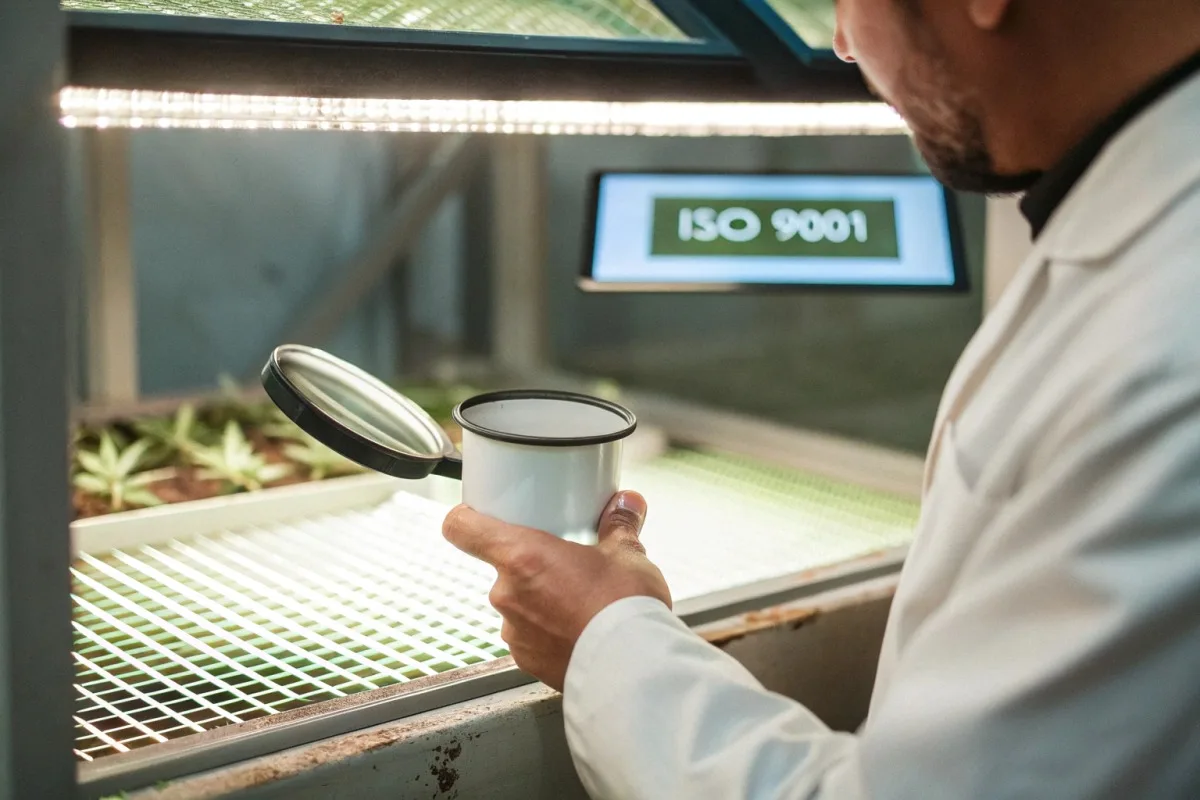
Legitimate agencies hold international accreditations. These prove their quality management systems meet global standards.
| Accreditation | What It Means | Why It Matters for Enamel Mugs |
|---|---|---|
| ISO 9001 3 | Quality management system | Consistent inspection procedures |
| ISO 17020 4 | Inspection body competence | Inspectors follow standardized methods |
| AQSIQ Approval | Chinese government recognition | Legal authority to inspect in China |
| CNAS Accreditation | China National Accreditation Service | Lab testing credibility |
Geographic Coverage
The agency must have inspectors near your supplier. Our factory is in Huizhou, Guangdong Province. An agency with inspectors in Shanghai would need extra travel time. This adds cost and scheduling complexity.
Ask specifically: "Do you have inspectors within two hours of the factory?" Local presence means faster scheduling and lower fees.
Service Range
A complete agency offers multiple inspection types. Each serves a different purpose in your order lifecycle.
| Inspection Type | When It Happens | What It Checks |
|---|---|---|
| Initial Production Check | Before mass production | Raw materials, sample approval |
| During Production (DUPRO) | At 20-40% completion | Early defect detection |
| Pre-Shipment Inspection (PSI) | At 80-100% completion | Final quality, quantity, packing |
| Container Loading | During shipping | Proper loading, no damage |
Communication and Reporting
Reports should arrive within 24-48 hours. They must include high-definition photos of defects, measurements, and test results. The language should be clear English without ambiguous terms.
Request a sample report before hiring any agency. Look for organized structure, specific defect descriptions, and actionable recommendations.
How can I verify that an inspector understands the specific quality standards for my custom enamelware?
When we ship mugs to US buyers, we know exactly which standards apply. But not all inspectors share this knowledge. We have received inspection reports that missed critical food-safety tests entirely. This creates serious liability risks.
Verify inspector expertise by requesting their enamelware inspection checklist, asking about specific tests like thermal shock and enamel adhesion, confirming knowledge of FDA, LFGB, and REACH standards for food-contact materials, and conducting a trial inspection before committing to full orders.
Product-Specific Knowledge Test
Before hiring an agency, ask technical questions. Their answers reveal actual expertise versus marketing claims.
Good questions include:
- What is acceptable enamel coating thickness for food-contact mugs?
- How do you test for enamel adhesion at handle attachment points?
- What visual defects indicate improper curing temperature?
- Which heavy metals require testing for FDA compliance?
An experienced inspector will answer confidently with specific numbers and methods. Vague answers suggest limited enamelware experience.
Understanding AQL Standards
AQL (Acceptable Quality Limit) determines how many defects are acceptable in a batch. For custom enamel mugs, we recommend:
| Defect Level | AQL Recommendation | Example Defects |
|---|---|---|
| Critical | 0 (zero tolerance) | Lead content exceeds limits, sharp edges |
| Major | 2.5 | Visible enamel chips, wrong color, logo misalignment |
| Minor | 4.0 | Slight scratches, minor packaging issues |
Ask the agency how they classify defects. Their classification system should align with your quality requirements.
Food-Contact Compliance
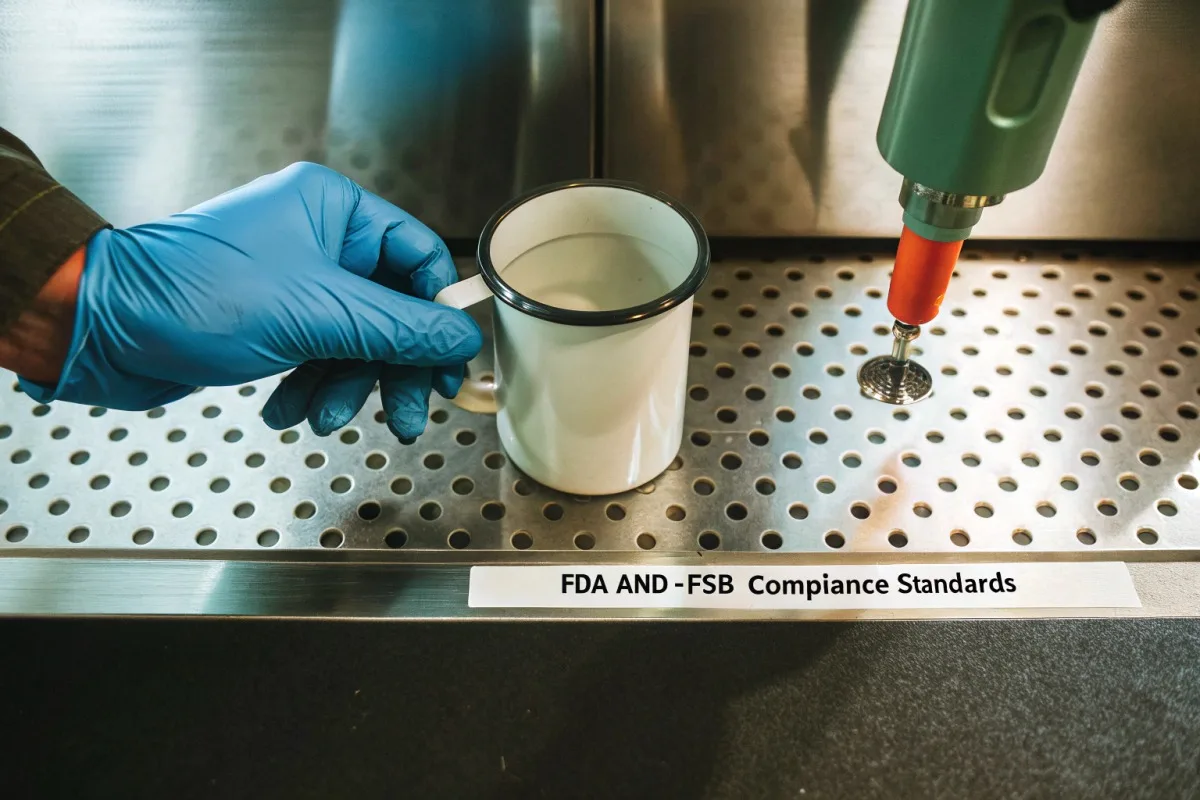
Enamel mugs sold in the US must meet FDA standards 5. For European markets, LFGB and REACH apply. Your inspector must know which tests verify compliance.
Key tests include:
- Heavy metal migration (lead, cadmium)
- BPA-free verification for any plastic components
- Food-safe coating composition
- Thermal stability under normal use conditions
Request certificates showing the inspector's training in food-contact testing protocols.
Trial Inspection Strategy
Never commit to a long-term relationship without testing first. Order a single inspection on a smaller batch. Evaluate the agency on:
- Response time to your inquiry
- Clarity of pre-inspection communication
- Report quality and detail level
- Accuracy compared to your own sample checks
- Professionalism of the inspector
This trial costs $250-450 but prevents expensive mistakes on larger orders.
What is the best way for me to manage the inspection process to avoid any potential delivery delays?
We have seen inspection delays push back container bookings by weeks. The cost cascades through the entire supply chain. Proper management prevents most scheduling problems before they start.
Manage the inspection process by booking inspectors at least five business days before needed, providing detailed specifications and approved samples upfront, maintaining direct communication channels with both agency and factory, and building buffer time into your shipping schedule for potential re-inspections.

Timeline Planning
Inspection scheduling requires coordination between you, the factory, and the agency. Poor timing is the most common cause of delays.
| Milestone | Recommended Lead Time | Action Required |
|---|---|---|
| Book inspection | 5-7 days before | Contact agency with factory details |
| Confirm readiness | 2 days before | Factory confirms goods are 80%+ complete |
| Inspector arrival | Inspection day | Ensure factory staff available |
| Report delivery | 24-48 hours after | Review results promptly |
| Re-inspection if needed | 3-5 days after | Allow time for factory corrections |
Clear Specification Documents
Inspectors can only check what you define. Ambiguous specifications lead to subjective judgments and disputes.
Provide these documents before every inspection:
- Approved golden sample photos
- Technical drawings with dimensions
- Pantone color codes for enamel and logos
- Packaging specifications with carton dimensions
- Your defect classification guide
Communication Protocols
Establish direct contact between all parties. When issues arise, fast communication prevents delays.
We recommend using WhatsApp or WeChat groups including:
- Your procurement team
- Factory quality manager
- Inspection agency coordinator
- Inspector on site (during inspection)
Real-time updates allow immediate decisions on borderline defects.
Building Schedule Buffers
Assume the first inspection will find issues requiring correction. Build time into your schedule for this reality.
For a standard 5,000-unit enamel mug order:
- Production completion: Day 0
- First inspection: Day 1
- Factory corrections: Days 2-5
- Re-inspection: Day 6
- Container loading: Day 8
This realistic timeline prevents last-minute scrambles that increase costs and errors.
Handling Failed Inspections
When inspections fail, respond systematically. Panic decisions often make situations worse.
First, request detailed photos of all defects. Second, discuss with the factory which issues they can fix quickly. Third, prioritize critical and major defects over minor ones. Fourth, schedule re-inspection only after the factory confirms completion of corrections.
How do I use the inspection results to ensure my private label mugs are ready for the US market?
Inspection reports are tools, not just pass/fail documents. When we receive feedback from buyers' inspections, we use every detail to improve future production. You should extract similar value from your reports.
Use inspection results by analyzing defect patterns to prevent recurrence, requiring factory corrective action plans for major issues, verifying compliance documentation for US customs, and retaining reports as quality records for your brand protection and potential liability defense.

Interpreting Report Data
A good inspection report contains actionable data. Learn to read beyond the pass/fail summary.
Look for:
- Defect frequency by type
- Photos showing severity levels
- Measurements versus specifications
- Test results with specific values
- Inspector observations and recommendations
Compliance Documentation
US Customs may request proof of product safety. Keep organized records from every inspection.
Essential documents include:
| Document | Purpose | Retention Period |
|---|---|---|
| Inspection report | Quality verification | 5 years minimum |
| Lab test certificates | Safety compliance | 5 years minimum |
| Photos of approved samples | Specification reference | Duration of product line |
| Factory audit reports | Supplier qualification | Annual updates |
Factory Improvement Process
Share inspection findings with your supplier constructively. Our factory appreciates specific feedback because it helps us improve processes.
Request a Corrective Action Report (CAR) for any major defects found. This document should explain:
- Root cause of the defect
- Immediate corrective action taken
- Preventive measures for future production
- Timeline for implementation
Risk Mitigation for US Market
The US market has specific requirements beyond basic quality. Prepare for these before shipping.
California Proposition 65 6 requires warning labels for products containing certain chemicals. Verify your enamel formulation does not trigger labeling requirements. CPSC (Consumer Product Safety Commission) regulations apply to consumer goods. Keep documentation proving compliance.
Amazon and major retailers often require additional certifications. Check platform requirements before listing products.
Continuous Improvement Tracking
Track inspection results across multiple orders. Patterns reveal systematic issues.
Create a simple spreadsheet recording:
- Order date and quantity
- Defect types and frequencies
- Pass/fail status
- Factory response quality
- Time to resolution
Over time, this data shows whether your supplier is improving, stable, or declining in quality.
Conclusion
Choosing the right third-party inspection agency protects your brand and ensures customer satisfaction. Apply these criteria systematically, verify expertise through trials, and use inspection data strategically for long-term success.
Footnotes
1. Explains the German food and feed code for food contact materials. ↩︎
2. Official EU regulation on Registration, Evaluation, Authorisation and Restriction of Chemicals. ↩︎
3. Official standard for quality management systems. ↩︎
4. Official standard for the competence of inspection bodies. ↩︎
5. Information on FDA regulations for food contact materials. ↩︎
6. Official information about California’s Safe Drinking Water and Toxic Enforcement Act. ↩︎